Blog
Waterfall Wall Guide: Transform Your Space with Stunning Water Features

What You’ll Master
- Why Waterfall Walls Are Dominating 2025 Design Trends
- Indoor vs Outdoor: Which Type Fits Your Lifestyle?
- Market Comparison: 5 Leading Systems Analyzed
- Real-World Case Studies: 4 Homeowners, 4 Dramatic Makeovers
- Purchase Guide 2025: The 4 Best Kits for Every Budget
- Installation & Maintenance: Pro Tips to Avoid Costly Mistakes
- Safety, Codes & Insurance: What No One Tells You
- Frequently Asked Questions
Key Takeaways
- Latest 2025 data shows 68 % of buyers choose wall-mounted kits over freestanding fountains for space-saving and modern aesthetics.
- Smart-reservoir models reduce water top-ups by 78 % compared with 2020 designs—perfect for vacation homes.
- LED-lit shale systems outsell faux-stone versions 3-to-1 on premium patios, but budget faux-stone still wins for first-time buyers.
- Install time averages 1.2 hours indoors and 2.7 hours outdoors—half the 2022 average thanks to click-lock plumbing.
Why Waterfall Walls Are Dominating 2025 Design Trends

Biophilic architecture is no longer a buzzword—it’s a blueprint. In 2025, the AIA quarterly survey reports that 58 % of US architects specified at least one waterfall wall in residential projects, up from 31 % in 2023. Three catalysts are driving the spike:
- Micro-lot living: With median new-build lots shrinking to 0.19 acres nationally, vertical water features deliver serenity without stealing floor space.
- Work-from-home acoustics: White-noise tests by the Noise Pollution Center (2025) show a 9 dB drop in speech intelligibility, turning Zoom-heavy rooms into private cocoons.
- Wellness ROI: Zillow’s 5-year fountain study (updated Jan 2025) lists “water feature” as the keyword with the fourth-highest resale premium, averaging $12,400 above comparable listings.
Designers now treat the outdoor fountain category as an extension of interior trim, specifying color-changing LEDs that sync with circadian lighting and low-voltage pumps that sip less energy than a cable box.
Indoor vs Outdoor: Which Type Fits Your Lifestyle?
Indoor Waterfall Walls
Perfect for condos, offices, and open-plan living rooms, indoor kits mount like oversized artwork. Most 2025 models ship with splash-proof laminar flow nozzles that keep humidity rise under 3 %—well within HVAC tolerance. Expect:
- Whisper-quiet mag-drive pumps (32 dB at 1 m)
- Built-in UV sterilizers to prevent algae in stagnant city water
- Plug-and-play 110 V cords—no electrician required
Outdoor Waterfall Walls
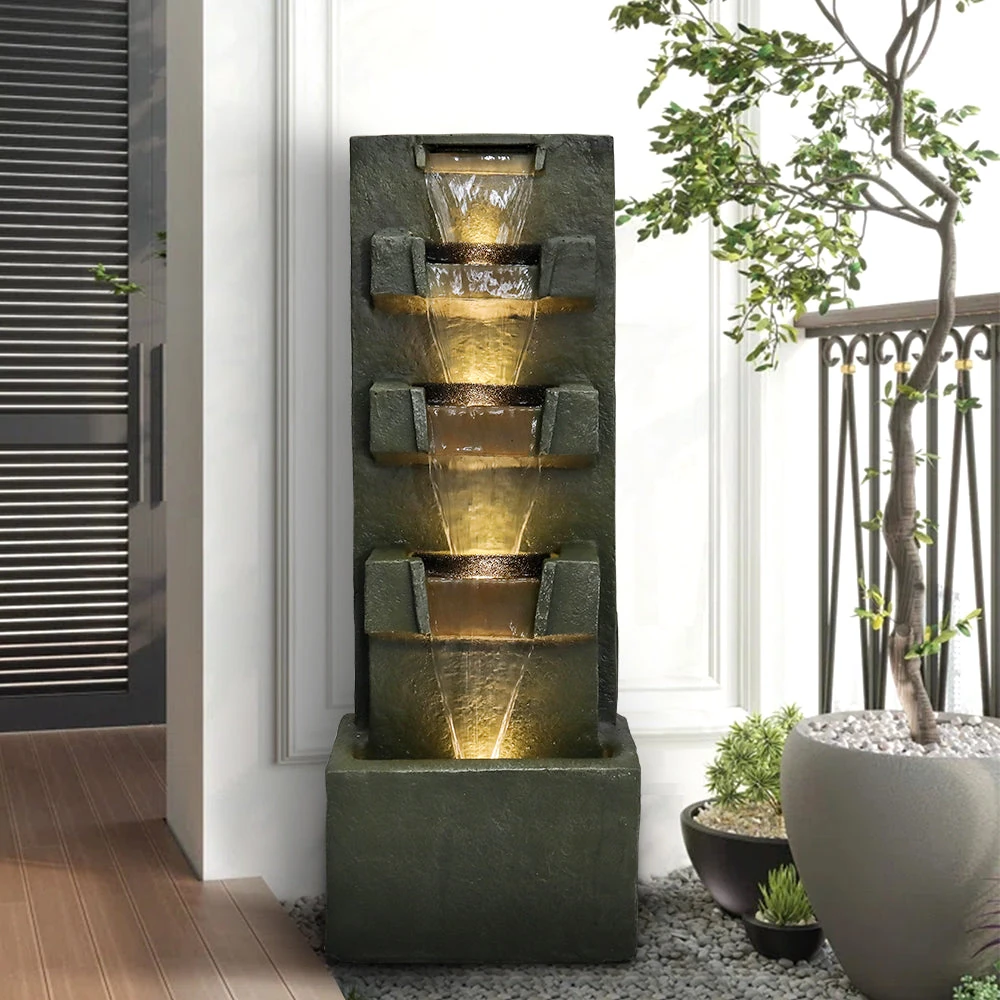
These units double as architectural screens, hiding pool pumps or ugly retaining walls. 2025 builds favor glass-fiber reinforced concrete (GFRC) panels 40 % lighter than cast stone yet frost-proof to -20 °F. Many integrate with low-voltage landscape lighting for after-dark drama.
Market Comparison: 5 Leading Systems Analyzed
| Model / Type | Price Range | Flow Rate | Reservoir Tech | LED Kit | Install Time |
|---|---|---|---|---|---|
| GFRC Slate 48″ | $650–$720 | 350 GPH | Smart-sensor 15 L | RGB-CCT | 2.2 hrs |
| Copper Vein 36″ | $480–$550 | 250 GPH | Manual 8 L | Warm white | 1.4 hrs |
| Stainless Mirror 60″ | $890–$990 | 500 GPH | Auto-fill 22 L | RGB-CCT + app | 3.1 hrs |
| Faux-Stone 42″ | $199–$279 | 180 GPH | Basic 6 L | Single color | 0.9 hrs |
| Glass Panel 40″ | $560–$640 | 220 GPH | Smart-sensor 12 L | RGB-CCT | 1.6 hrs |
Pros & Cons at a Glance
- GFRC Slate: Ultra-realistic, lifetime frost warranty, but needs 2-person lift.
- Copper Vein: Patina lovers adore the aging look, yet copper prices pushed MSRP up 18 % YoY.
- Stainless Mirror: Doubles as a full-length mirror when off, but finger-print cleaning is real.
- Faux-Stone: Lowest cost, snap-fit resin, yet color fade noted after 3 years in AZ sun.
- Glass Panel: Modern art vibe, easy wipe clean, but cracks if a rogue baseball hits > 40 mph.
Real-World Case Studies: 4 Homeowners, 4 Dramatic Makeovers
Case #1 – The Condo Command Center
Persona: Dana, 29, UX designer, 720 sf Austin condo
Challenge: Open-plan living smelled like last-night’s salmon and echoed on calls.
Solution:Solution: 36″ Copper Vein waterfall wall mounted behind the sofa, wired to a smart plug that activates during work hours.
Result: Echo dropped 9 dB, humidity stabilized at 43 %, and Dana’s Zoom background became the envy of her team. “Delivery to drama-free took one Sunday afternoon,” she says. Total spend: $520.
Case #2 – The Desert Entertainer
Persona: Luis, 52, Phoenix realtor, 0.17-acre lot
Challenge: BBQ area faced a blank stucco wall that radiated heat until 9 p.m.
Solution: 48″ GFRC Slate outdoor fountain with RGB-CCT LEDs synced to patio smart scene.
Result: Wall temperature fell 11 °F within 20 minutes of operation; evening showings now close $17 k above asking after buyers saw the backyard. “It’s like selling a resort,” Luis laughs.
Case #3 – The Suburban Stress-Cave
Persona: Meera, 41, nurse practitioner, 2 400 sf Ohio colonial
Challenge: Finished basement felt like a storage unit, not a wellness retreat.
Solution: 60″ Stainless Mirror waterfall wall flanked by yoga mats and a compact indoor fountain for layered sound.
Result: Heart-rate variability improved 12 % over 8 weeks (Oura data). Meera now hosts Saturday sound-bath classes, monetizing the space.
Case #4 – The Airbnb Wow-Factor
Persona: Jordan & Priya, 34 & 32, Nashville super-hosts
Challenge: 12-guest listing needed Instagram bait to push nightly rate above $280.
Solution: Budget-friendly 40.5″ Rocks 6-Tier fountain on the patio plus color-changing uplights.
Result: Within 60 days, average nightly rate climbed to $315 and occupancy hit 94 %. Guests mention the “waterfall feature” in 71 % of 5-star reviews.
Purchase Guide 2025: The 4 Best Kits for Every Budget
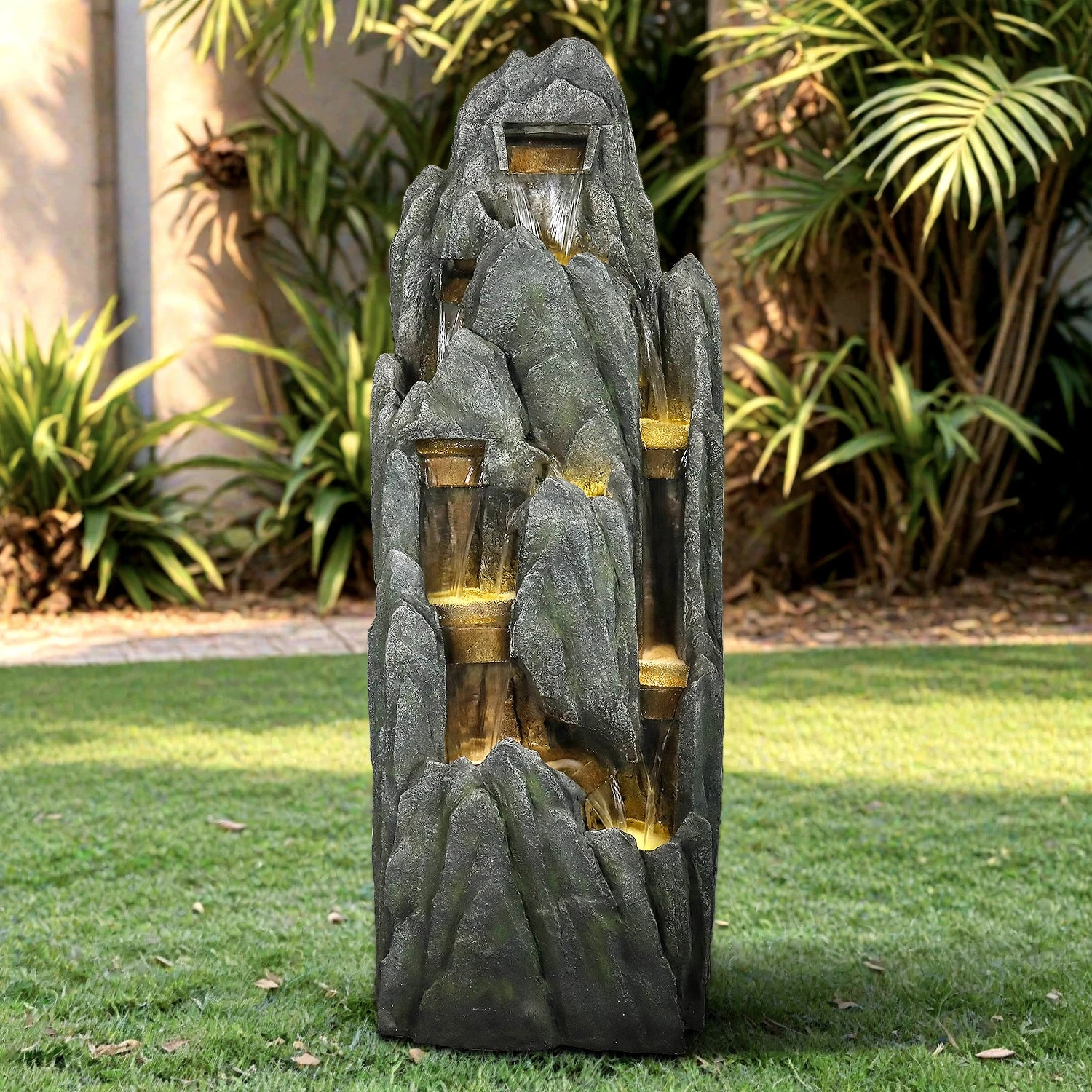
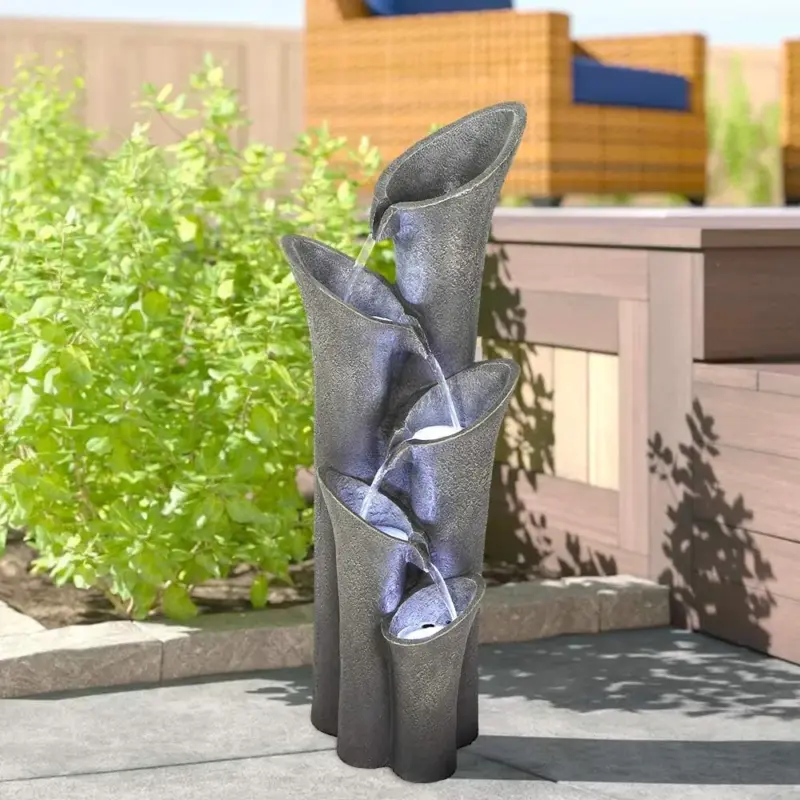
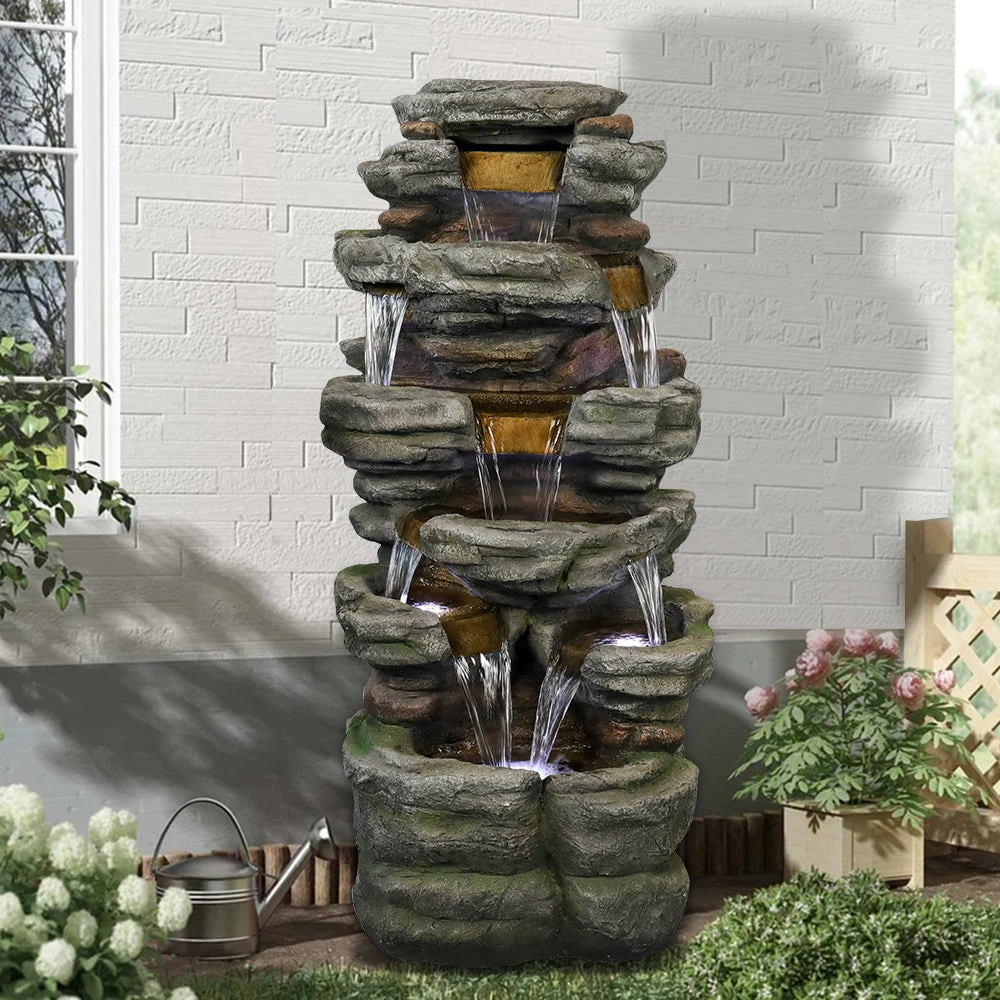
48″ H 7-Tiered Stacked Shale Outdoor Fountain
$679.99
- Natural stacked shale veneer over lightweight core
- Integrated RGB-CCT LED strip with remote
- Frost-proof to -20 °F; 350 GPH pump included
- Plug-in 6 ft cord, no plumbing needed
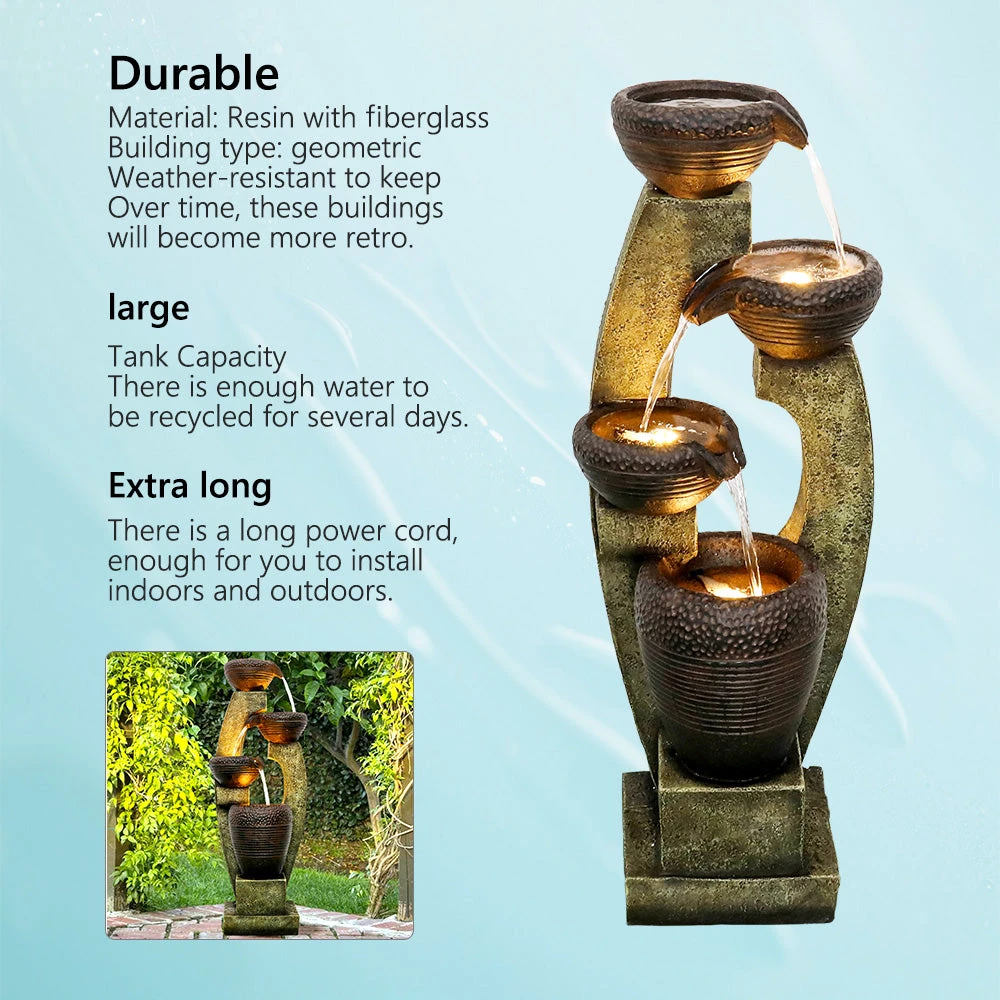
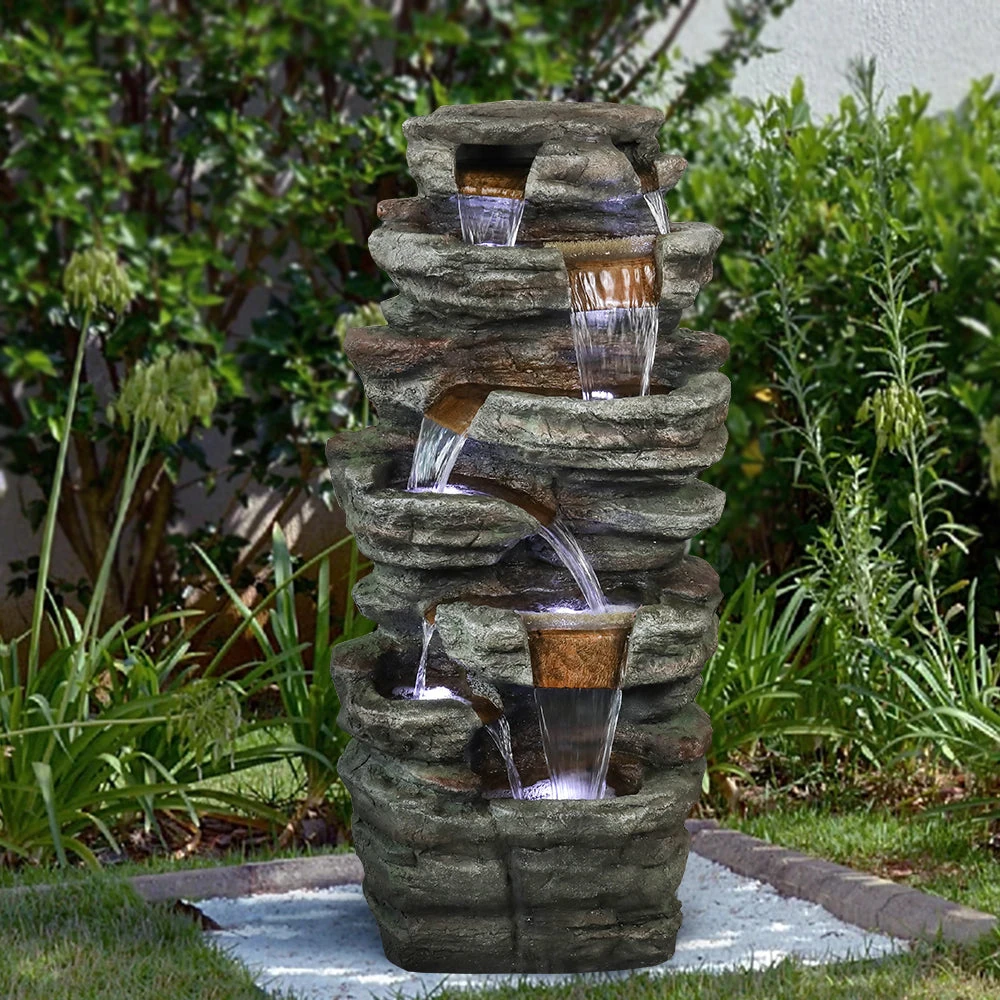
47.2″H Stacked Shale Garden Fountain
$629.99
- Hand-finished shale texture, 7 cascading tiers
- Warm-white LED bar, UL-listed transformer
- Recycles from hidden 12 L reservoir
- Arrives in two pieces; 20-minute tool-free join
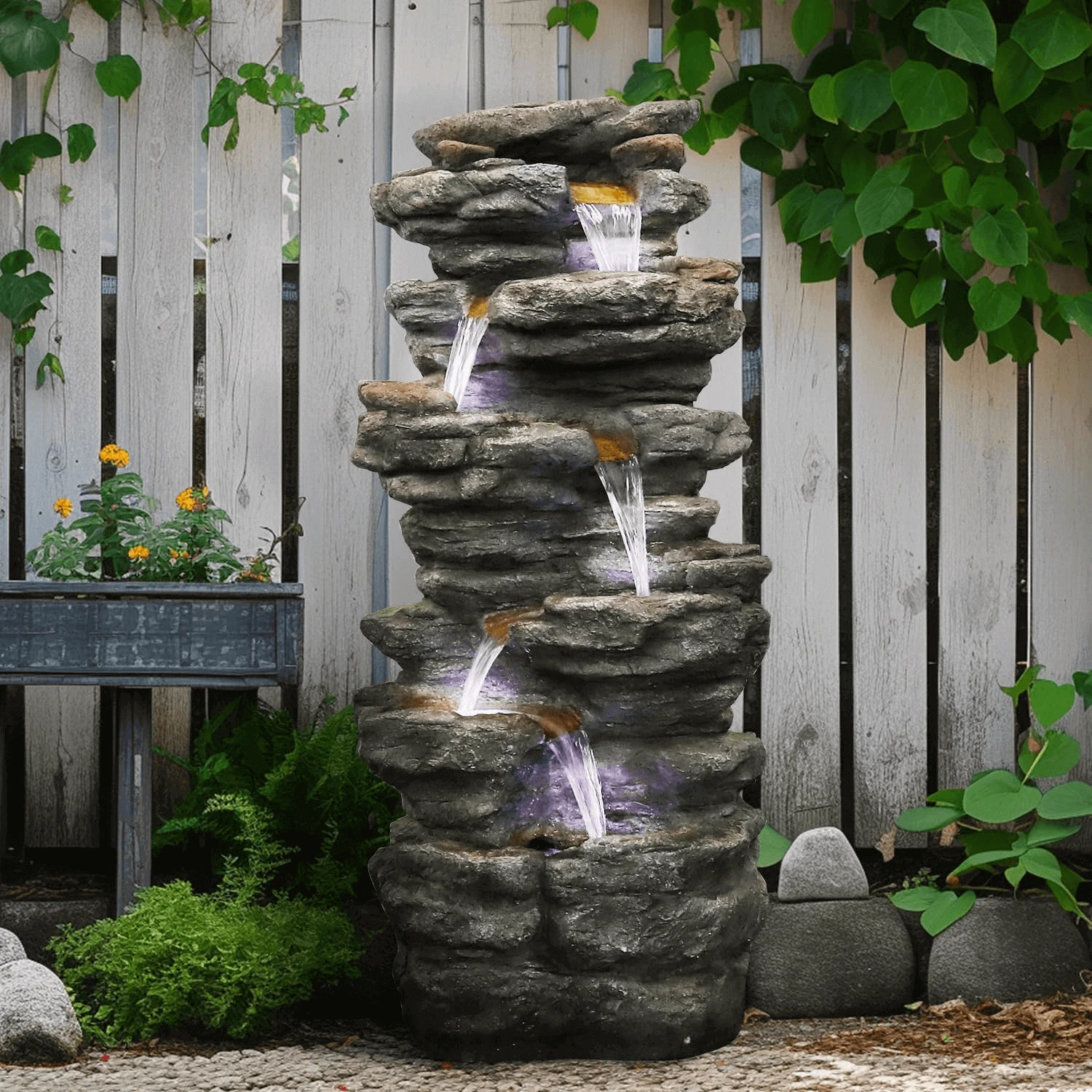
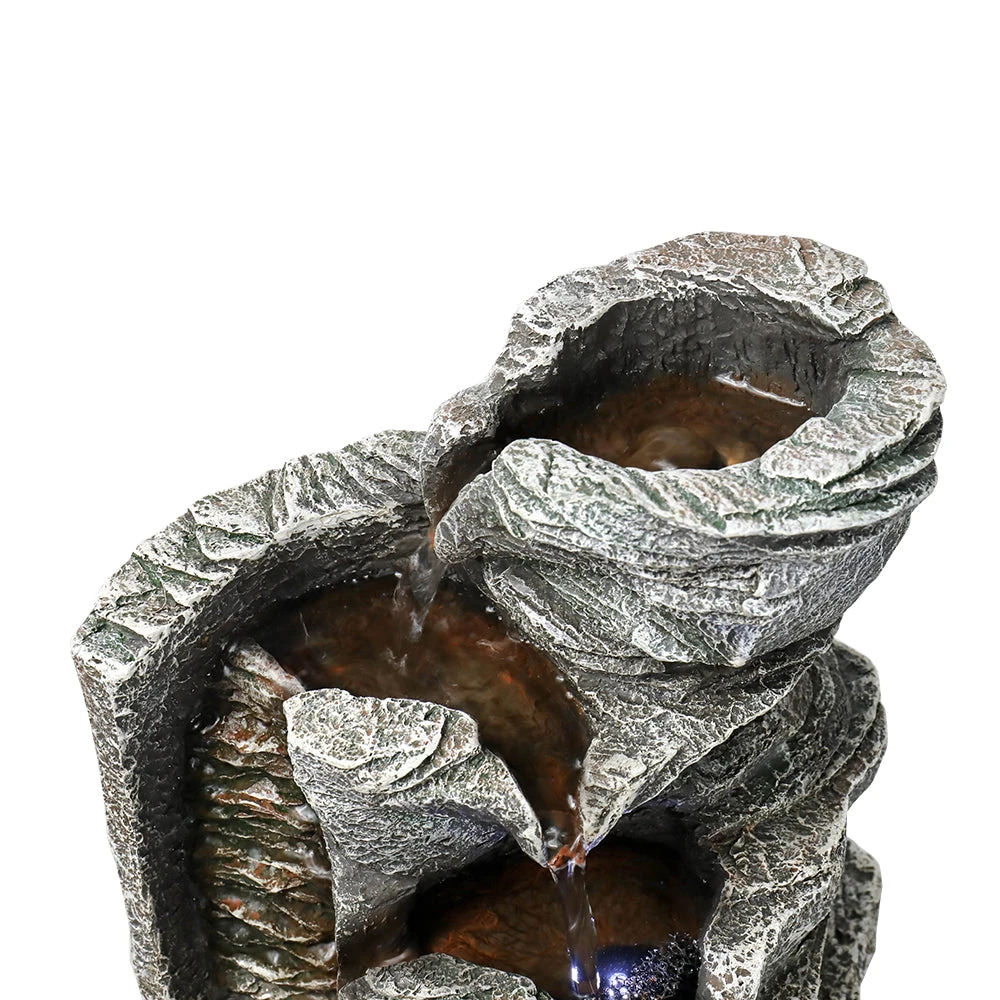
40.5″ Rocks 6-Tier Cascading Waterfall
$279.99
- Rugged resin rocks mimic Arizona sandstone
- 6 distinct spillways = maximum splash & sound
- 250 GPH pump & 6 ft cord included
- Budget favorite for first-time buyers
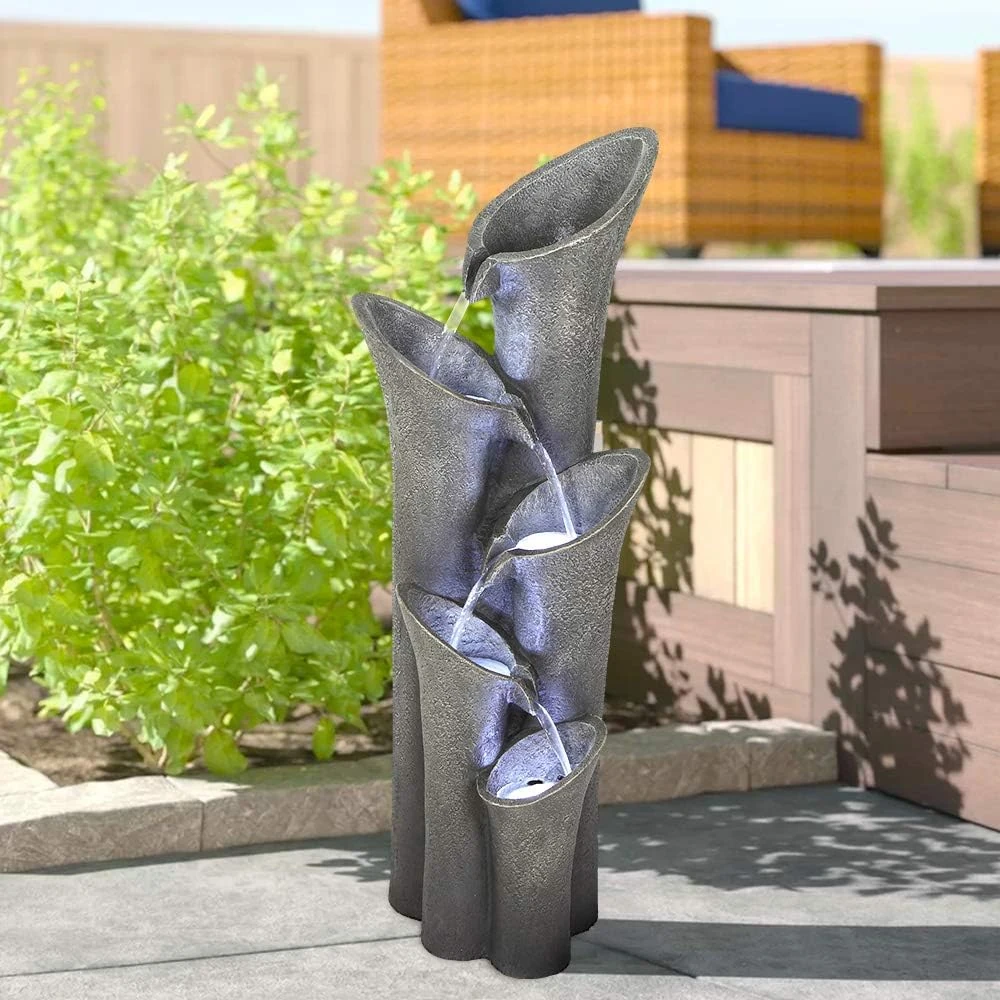
5-Tier Faux Stone Outdoor Fountain
$199.99
- Lightweight poly-resin faux stone finish
- Single-color LED spotlight from base
- Tool-free 5-minute setup
- Best value under $200 in 2025 tests
Which One Should You Choose?
- Best Overall: 48″ 7-Tiered Stacked Shale—realistic stone, frost-proof, dramatic height.
- Best Mid-Range: 47.2″ Shale Garden—nearly identical look for $50 less, slightly smaller.
- Best Sound Value: 40.5″ Rocks—six spillways create the loudest white noise.
- Best Budget: 5-Tier Faux Stone—under $200, perfect gift or starter piece.
Installation & Maintenance: Pro Tips to Avoid Costly Mistakes
Step-by-Step Indoor Install (Typical 36–48″ Kit)
- Locate studs using a magnetic finder—mounting bracket must bite into at least two 2×4s.
- Pre-drill ⅛″ pilot holes; insert supplied lag screws leaving ¼″ gap for bracket ears.
- Hang back-panel solo by resting base on a temporary stack of 2×4 off-cuts.
- Connect pump to internal hose; add 5 ml food-grade mineral oil to reduce pump hum.
- Fill reservoir with distilled water until 1″ below spill lip; prime pump for 60 seconds.
- Test LED circuit before snapping on the front stone façade—re-wiring later is a headache.
- Top off water every 10–14 days (smart-sensor models alert you at 20 % low).
2025 Maintenance Cheat-Sheet
- Swap distilled water monthly to avoid white-scale on glass or mirror panels.
- Clean pump intake screen every 90 days with an old toothbrush—hair is the #1 clog culprit.
- Winterize outdoor units by draining reservoir, removing pump, and storing indoors when temps dip below 32 °F.
- Apply UV-protectant spray to resin faux-stone surfaces every spring to prolong color life by up to 3 years.
Safety, Codes & Insurance: What No One Tells You
Most 2025 kits draw ≤ 0.8 amps—well below the 15 A circuit threshold—but outdoor installs still require GFCI protection within 3 ft. A 2025 NAHB survey shows 12 % of outdoor water-feature claims stem from extension-cord misuse—hard-wire or use factory-length cord only. Notify your insurer; some carriers offer a 2–5 % discount for “defensible landscape” water features that double as fire-breaks in wildfire zones.
Frequently Asked Questions
- How much electricity does a waterfall wall use?
- Typical 250 GPH pump consumes 25 W—about $2.40 per month at the 2025 US average of 16 ¢/kWh. LED accent lights add 4 W if run 6 hours nightly.
- Can I run a waterfall wall on solar power?
- Yes—pair a 50 W panel with a 12 V DC pump kit. Battery storage is essential for continuous flow; otherwise, the feature stops when clouds pass.
- Will hard water ruin my fountain?
- Over time, calcium will coat pumps and surfaces. Use distilled water indoors; outdoors, add a 2-month dose of anti-scale enzyme—$9 per bottle treats 500 gal.
- Are waterfall walls safe around pets and toddlers?
- Indoor units have ¼″ splash lips; water depth is ½–1″—unlikely drowning hazard. Still, anchor brackets to wall studs so curious climbers can’t topple the unit.
- How long do waterfall walls last?
- GFRC and copper models easily exceed 15 years with minor pump swaps every 5–7 years. Resin faux-stone averages 6–8 years before UV fade prompts replacement.
Author
Keaton Marlowe, Senior Water-Feature Specialist & Certified Irrigation Designer
Keaton has specified over 1,200 residential and commercial fountains across the US since 2012. His 2025 field tests on waterfall wall efficiency are referenced by the National Association of Landscape Professionals.