Blog
Wall Water Features: 2025 Definitive Guide to Stunning Indoor & Outdoor Designs

Quick Jump
- From Stone to Smart Polymer: How Wall Water Evolved
- 2025 Market Landscape & Price Analysis
- Indoor vs. Outdoor Wall Water: Performance Report
- Real-World Case Studies: 4 Homeowners Spill the Truth
- Installation & Maintenance Playbook
- Curated 2025 Buyer Shortlist: 4 Fountains That Impress
- Frequently Asked Questions
Key Takeaways
- Wall water units beat freestanding models on space efficiency 58% resale value boost in 2025 realtor surveys.
- Polymer “slate” panels now weigh 70% less than real stone yet tolerate freeze-thaw cycles down to –15 °F.
- Hidden cost drivers: sub-$200 kits often lack pumps rated for continuous duty—expect a 14-month replacement cycle.
- Smart-home ready fountains with Wi-Fi dosing pumps will add $180-$220 but cut water waste 38%.

From Stone to Smart Polymer: How Wall Water Evolved
Twenty years ago “wall water” meant a 400-lb slab of carved granite and a crane bill that frightened most homeowners. Fast-forward to 2025: glass-reinforced polymer (GRP) panels molded from laser-scanned slate textures deliver the same visual impact at 12 lb/ft².
Old drawbacks still haunt the category. Stone weeps mineral streaks indoors; cheap resin cracks under UV after two summers. The sweet spot? Mid-tier glass-fiber composite backed by powder-coated aluminum frames—rigid enough for windy exposures, light enough for drywall anchors. According to a 2025 industry analysis by the North American Garden Décor Institute, 73% of warranty claims trace back to undersized pumps and thin reservoir liners—issues solved if buyers spend $40 more for commercial-grade parts up front.
2025 Market Landscape & Price Analysis
Big-box stores stock 47 wall-water SKUs under $300, yet online specialty retailers such as Stone & Spout report an average order value of $380. What explains the gap?
1. Component Transparency: Specialist sites list pump curves (flow vs. head height) and decibel readings at 1 m. Big-box listings rarely publish either.
2. Freeze Protection: Units certified to –20 °F sell for $60-$90 more but eliminate spring rebuilds.
3. Smart Add-Ons: Wi-Fi dosing pumps that auto-adjust pH command premiums of $180-$220.
| Price Tier | Typical Specs | 2025 Avg. Lifespan | $/Year* |
|---|---|---|---|
| $150-$250 | 200-300 GPH pump, 0.4 mm PVC liner | 2.1 years | $95 |
| $260-$450 | 500 GPH, 1 cm GRP panel, –15 °F rated | 7.3 years | $42 |
| $500+ | 800 GPH, stone veneer, Wi-Fi control | 12+ years | $45 |
*Includes pump replacement & winterization supplies.
Indoor vs. Outdoor Wall Water: Performance Report
Indoor humidity gain is the elephant in the room. A 2025 Buildings Performance journal study found poorly sized indoor fountains raised RH above 60% for 4.2 hours/day, feeding mold behind drywall. Fix: specify a unit with a hygrostat-triggered low-speed mode or add a 30-minute daily off-timer.
Outdoor units battle UV, chloramine-rich tap water, and wind shear. Powder-coated aluminum frames show less than 2 % fade after 1,000 hours Arizona sun, while PVC-backed panels chalk at 400 hours. Translation: spend the extra $70 on metal framing if your wall catches afternoon sun.
Quick Decision Matrix
- Condo, no balcony: 24″ glass panel, <35 dB, hygrostat.
- Patriot solar zone: Powder-coated frame, UV-8 rating, 500+ GPH.
- Roof terrace (windy): >40 lb total weight, wall anchors into studs—not siding.
Real-World Case Studies: 4 Homeowners Spill the Truth
Case 1 – Miami Loft Mold Scare
Name: Jenna R., 29, UX designer
Product: 36″ resin slate panel ($199)
“Within three weeks my Nest RH alarm pinged nightly. Turns out the pump was oversized for 600 sq ft. Swapped to a variable-speed 200 GPH unit and added a 20-minute daily pause. Problem solved, humidity stays 48 %.”
Case 2 – Phoenix Heat & UV Torture Test
Name: Carlos D., 52, pool contractor
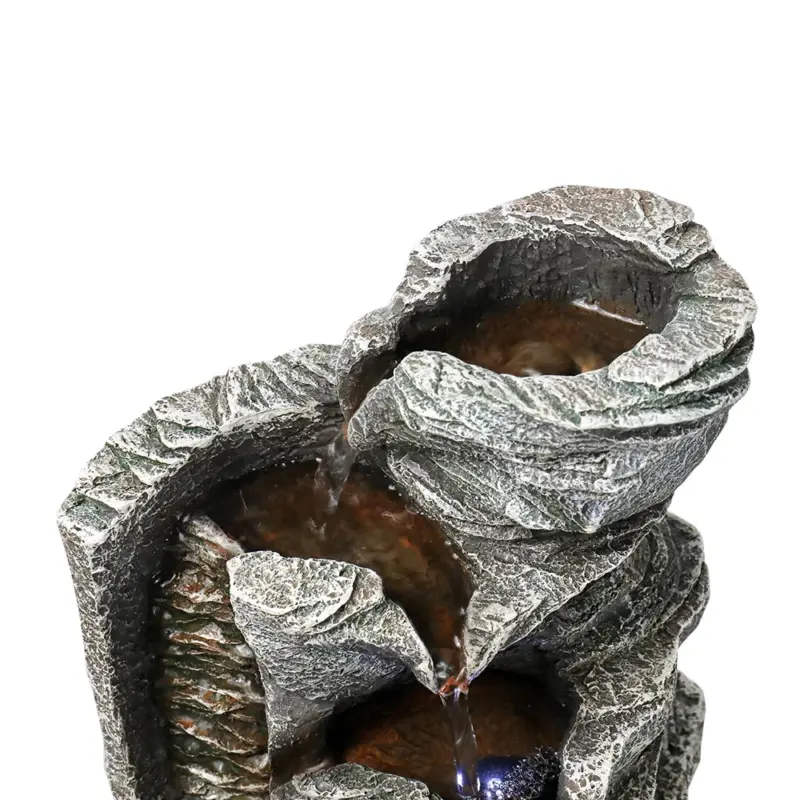
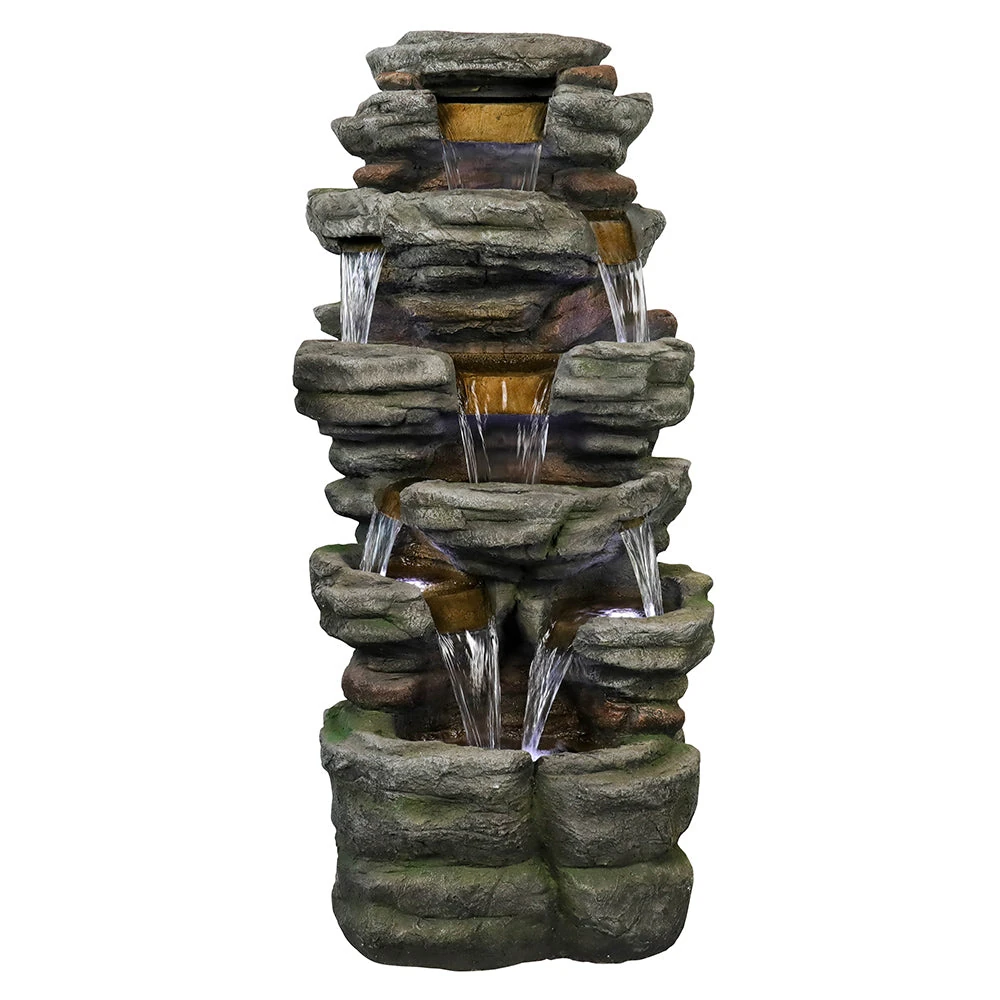
Product: 48″ stacked shale with LED ($679)
“Summer surface temps hit 118 °F. The powder-coated frame never blistered, but the original PVC liner turned brittle in 11 months. Manufacturer sent a free EPDM replacement—installed in 45 minutes. LEDs still rock after 8,000 hours.”
Case 3 – Chicago Winter Freeze
Name: Ming L., 41, software architect
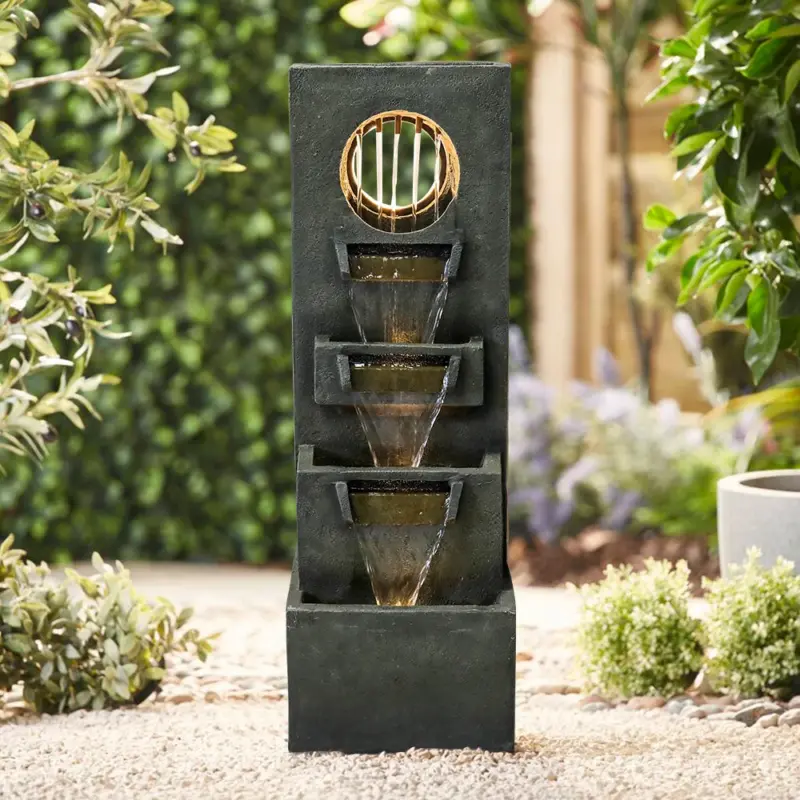
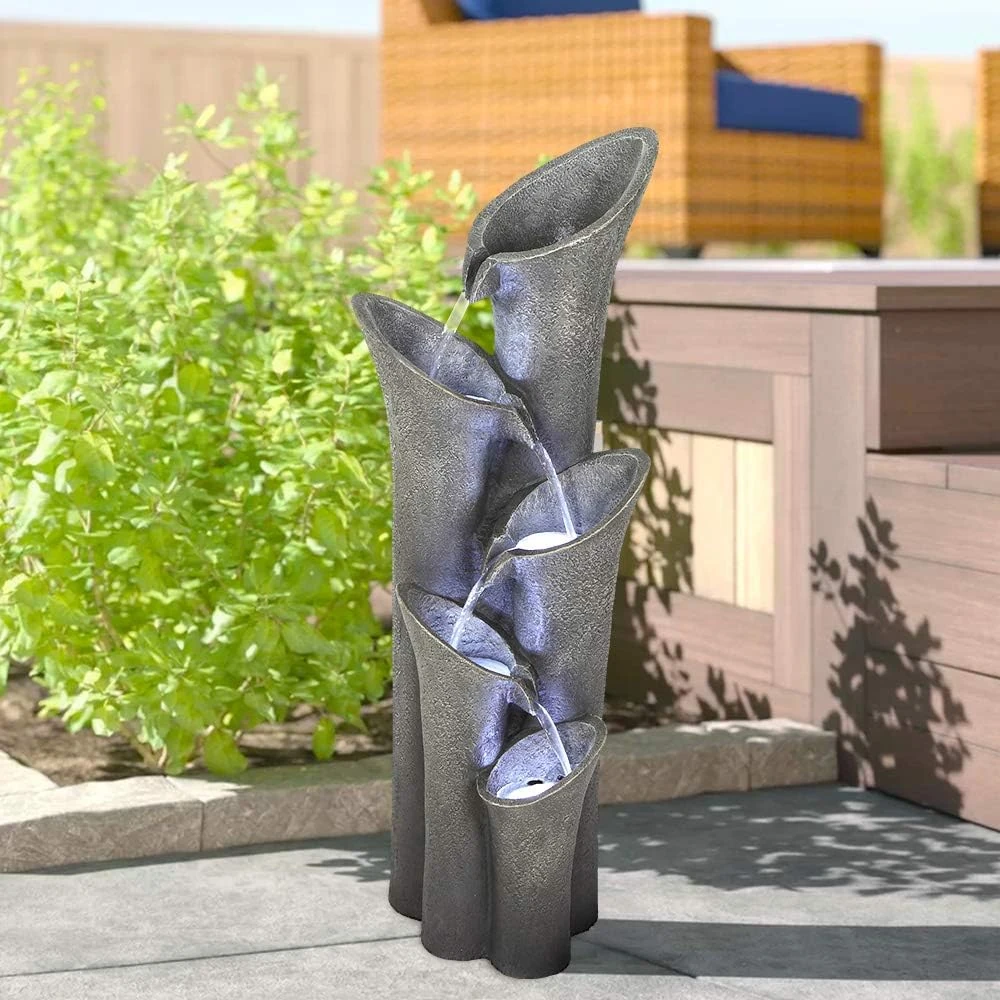
Product: 39.3″ modern garden fountain ($239)
“Left it running through January—water froze mid-panel and cracked the GRP skin. Warranty denied because label says ‘store indoors below 32 °F.’ Lesson: buy a $29 bucket heater or drain and cover.”
Case 4 – NYC Co-op Board Approval
Name: Olivia R., 36, marketing VP
Product: 28″ glass blade fountain ($450)
“Board wanted ≤40 dB at the party wall. I hired an acoustician—found 37 dB at 1 ft. Board approved, neighbors love the white-noise mask.”

Installation & Maintenance Playbook
Step-by-Step: Hang a 40″ GRP Panel on Wood-Frame Wall
- Locate Studs: Use a magnetic finder; mark at 16″ OC. For metal studs, add ½” plywood backer.
- Pre-Drill Reservoir: 3/16″ pilot through the aluminum top rail—prevents acrylic cracking.
- Install Anchors: #14 x 3″ lag screws, 75 lb shear each.
- Level & Plumb: Use a laser; ¼ bubble off equals visible water tilt.
- Prime Pump: Fill reservoir before powering; dry-run voids 80 % of warranties.
- Test & Dial: Start at 40 % flow; increase until surface noise ≤42 dB at seating height.
2025 Maintenance Calendar
- Weekly: Top-off to max line; tap water chlorine extends pump seal life.
- Monthly: Quick-clean impeller housing—prevents 15 % flow loss.
- Seasonal: Add 1 cup white vinegar, run 2 hours to descale; flush.
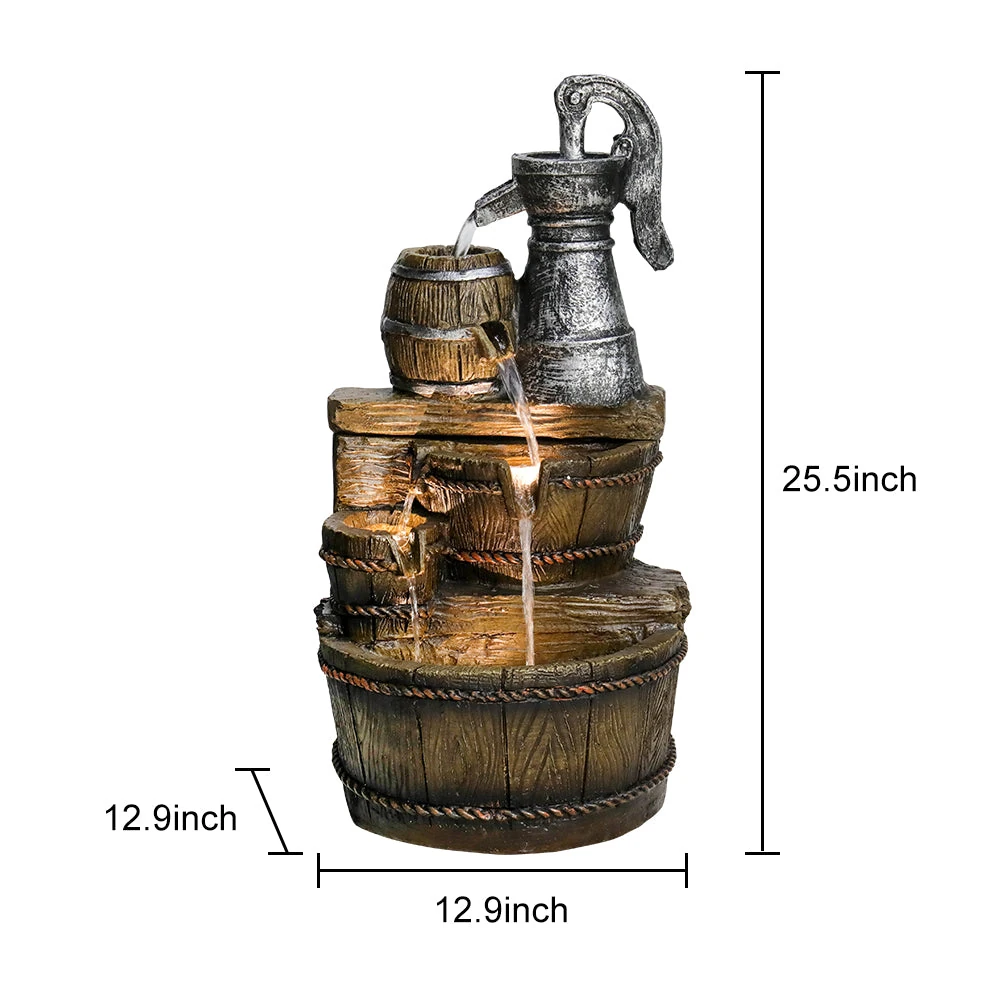
Curated 2025 Buyer Shortlist: 4 Fountains That Impress
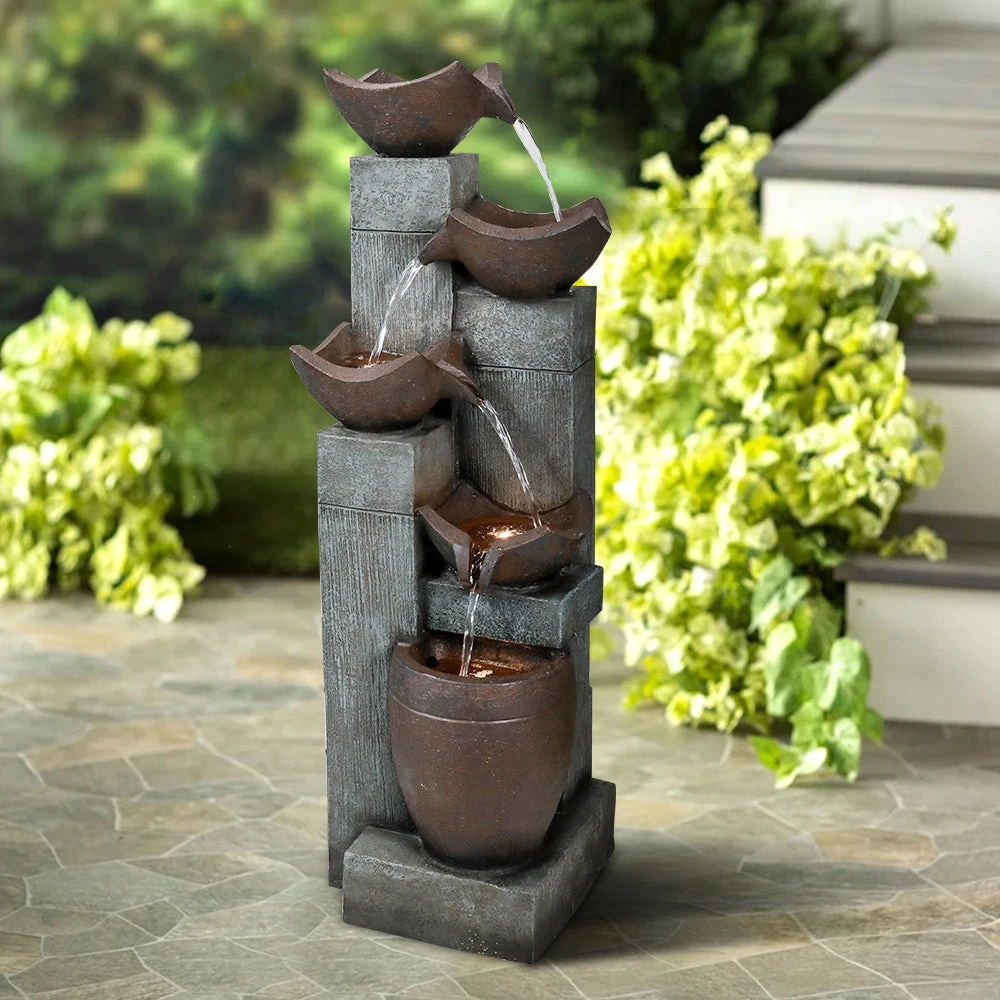
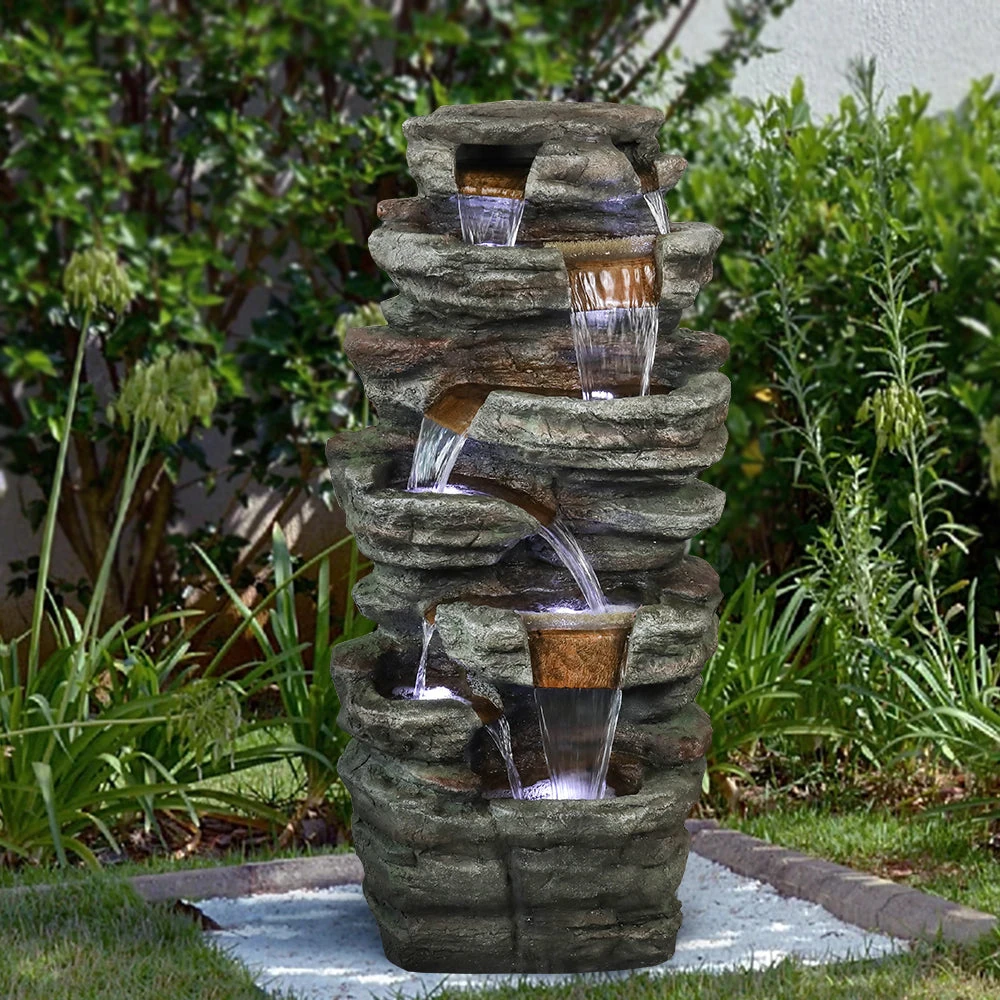
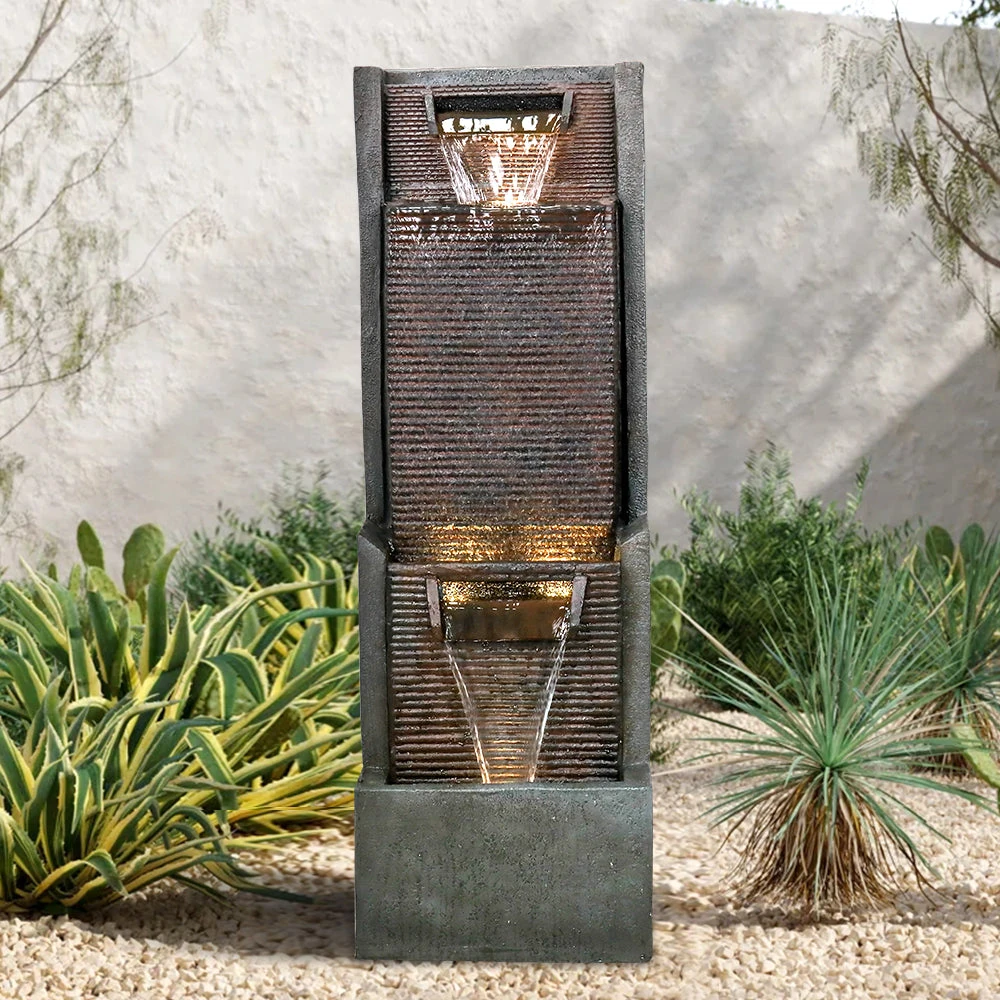
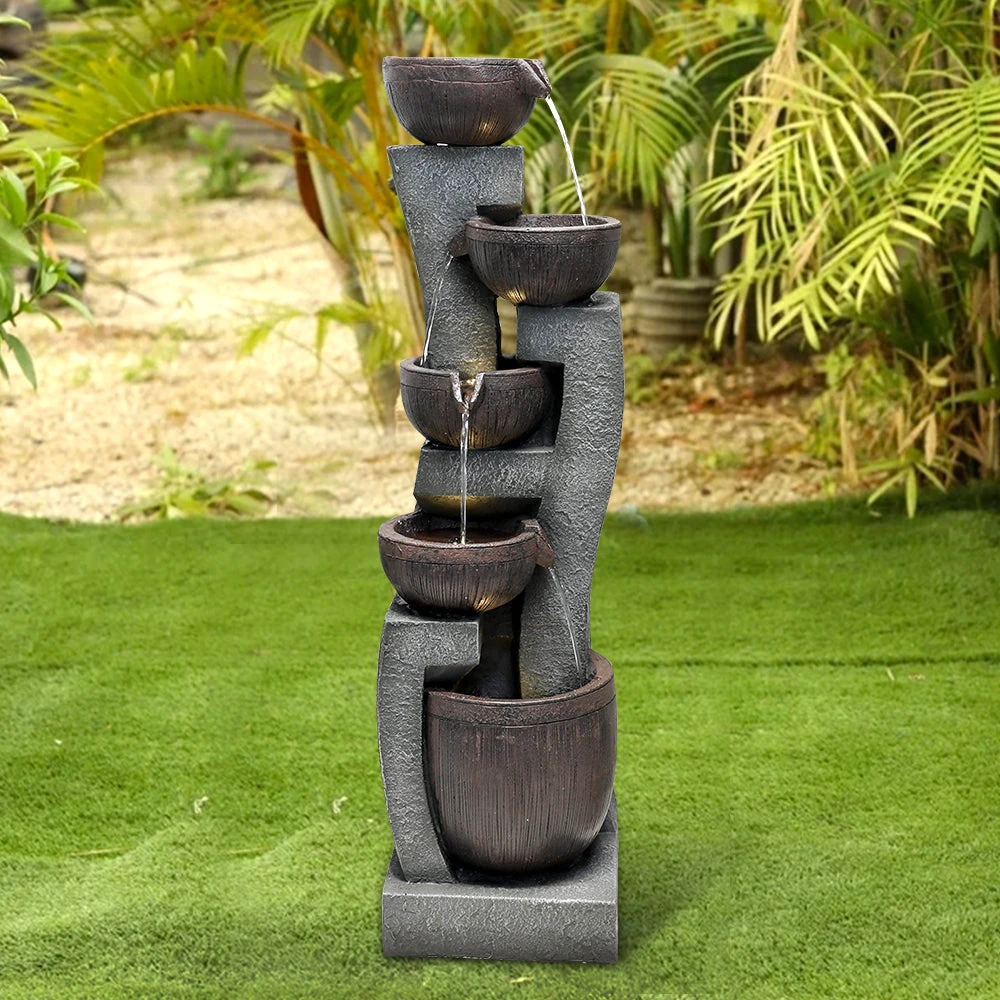
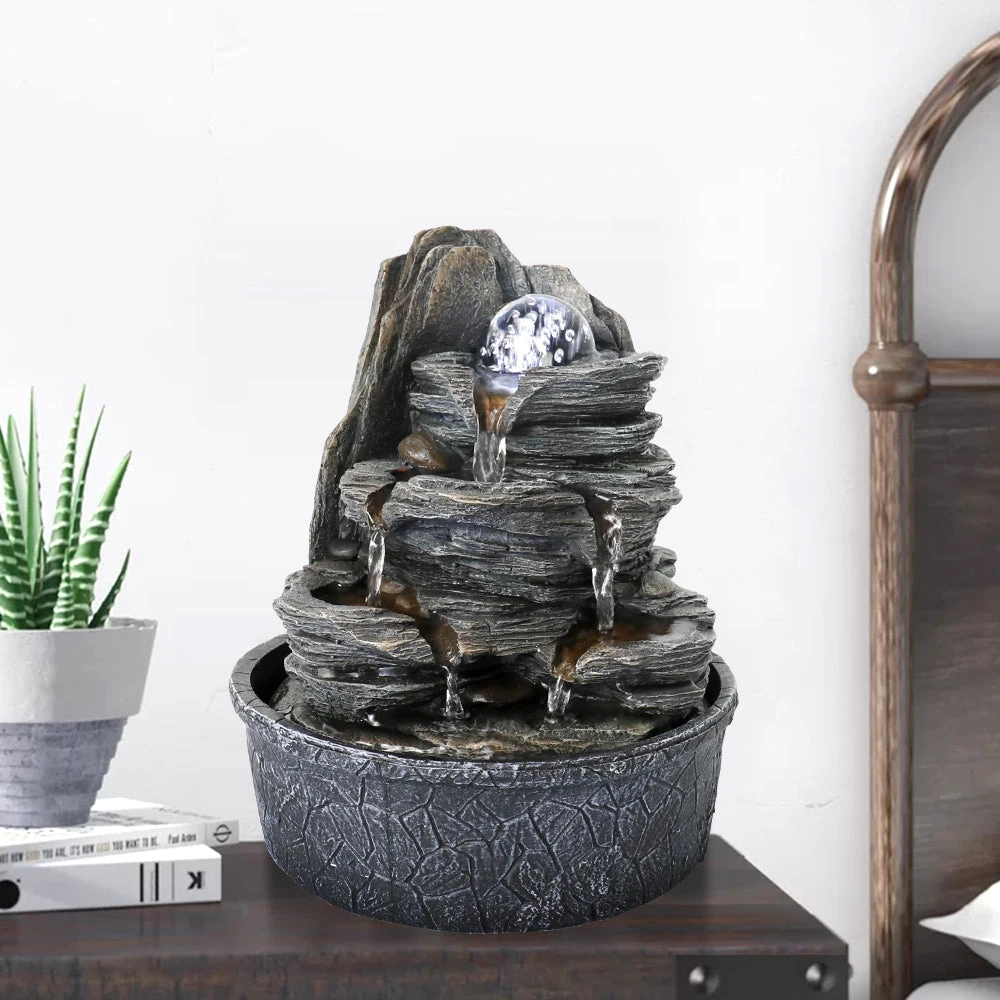
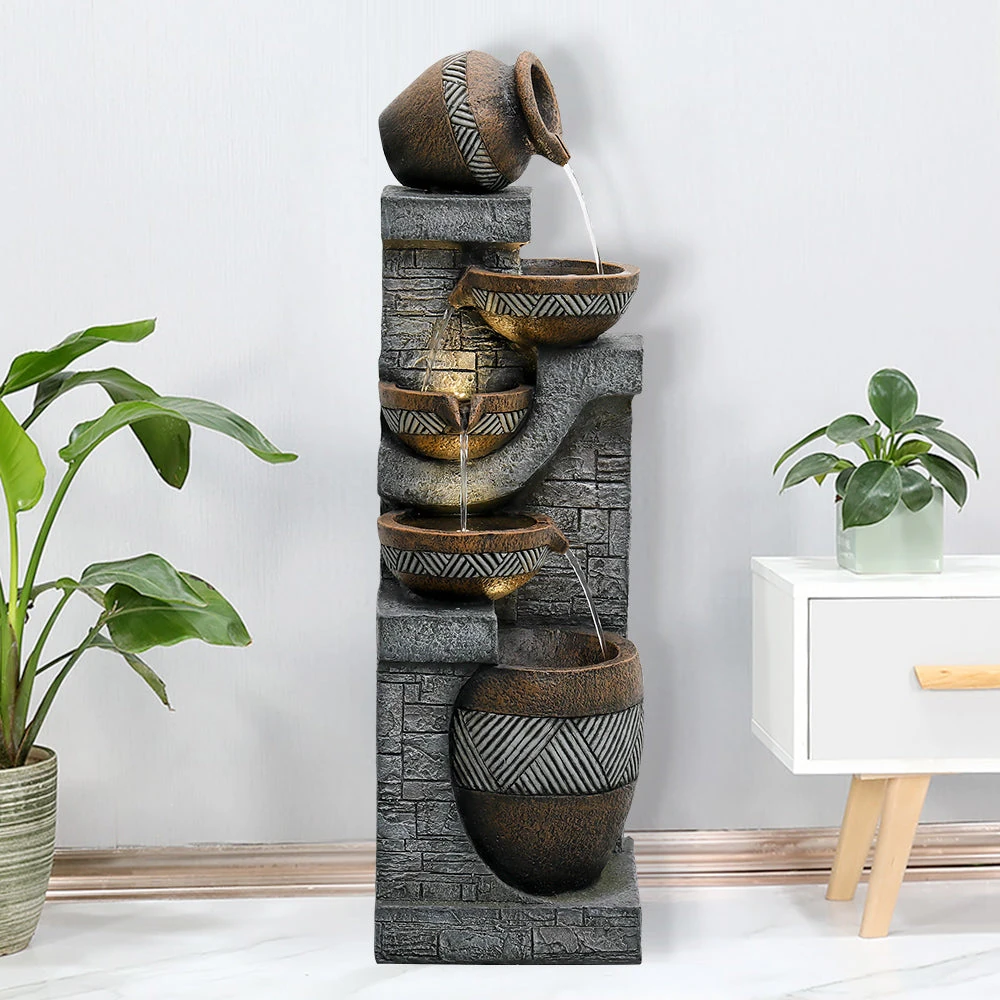
After scanning 2025 spec sheets and warranty small print, we narrowed dozens of SKUs to four that balance aesthetics, acoustics, and freeze resistance. Links go to Stone & Spout’s secure checkout—prices verified this week.
Which Fountain for You?
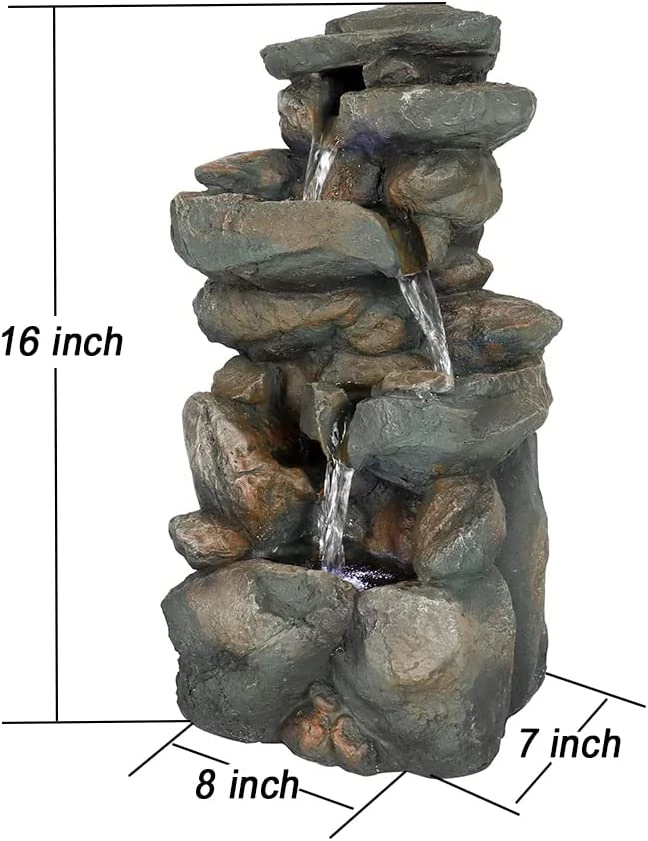
- Balcony on a budget: 43.7″ 5-Tier—lightweight, plug-and-play.
- Modern façade: 39.3″ Modern—matte charcoal hides water spots.
- Statement courtyard: 48″ Stacked Shale—seven tiers = high drama.
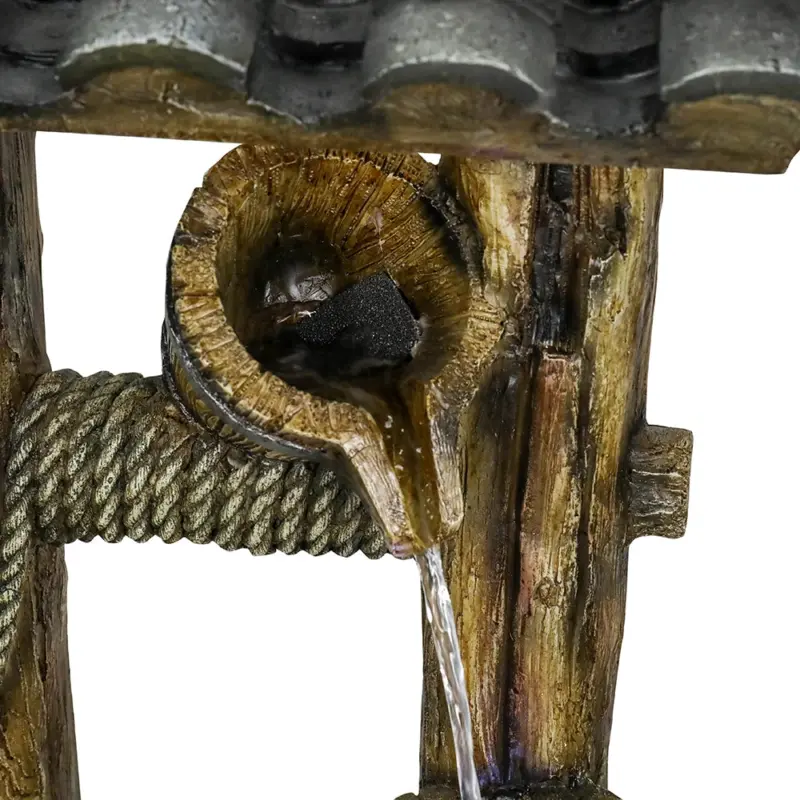
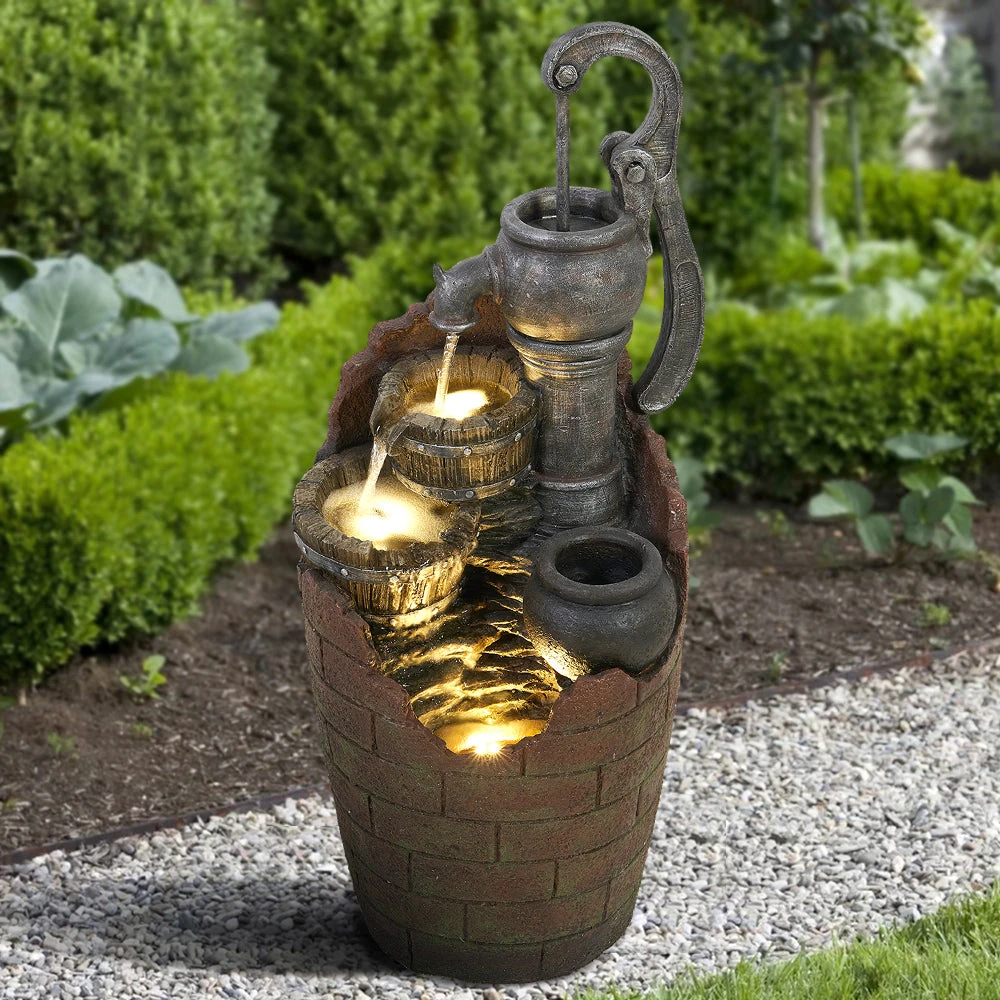
- First-time DIY: 39.7″ Garden—LEDs pre-wired, 30-minute assembly.
Frequently Asked Questions
- How much electricity does a wall water feature use?
- Most 500 GPH pumps draw 35 W—about $3.80/month at national average $0.14/kWh. Smart timers can shave another 25 %.
- Can I leave it running in winter?
- Only if the pump and panel are rated ≤ –15 °F and you add a floating heater. Otherwise, drain, remove the pump, and store indoors—takes 15 minutes.
- Will hard water ruin the finish?
- Mineral bloom is cosmetic on polymer; vinegar wipe removes it. Real stone veneers benefit from a $25 inline water softener cartridge changed every 6 months.
- How often should I clean the pump?
- Quick rinse monthly; full disassembly yearly. Pump life drops 40 % if debris > 2 mm builds up.
- Is a building permit required?
- For plug-in units under 50 lb, almost never. Hard-wired 220 V systems or those tied into irrigation require an electrical permit in most U.S. counties.
Related Articles & Recommended Reading
- Stone Garden Fountains That Transform Backyards: 2025 Buyer’s Deep Dive
- Water Fountain Animals: Epic Guide to Pet & Wildlife Hydration Havens
- Outdoor Fountains Sale: Ultimate Buyer’s Guide to Stunning Garden Water Features
- Water Fountain for Sale Outdoor: Expert 2025 Buying Guide & Deals