Blog
Waterfalls for a Pond: Ultimate 2025 Guide to Transform Your Backyard Oasis

Quick Jump Menu
- 2025 Market Pulse: Waterfall Tech That’s Selling Out
- Cascading vs. Sheet vs. Rock-Weep: Which Type Fits Your Ecosystem?
- Hydraulic Deep Dive: GPH, Head Height & Oxygen Saturation
- Real-World Case Studies: 4 Backyards, 4 Budgets, 4 Stunning Results
- Purchase Matrix: 4 Ready-Made Kits That Pros Swear By
- 2025 Install Playbook: From Bucket Test to First Splash in One Weekend
- Frequently Asked Questions
Key Takeaways
- Mag-drive pumps now hit 92 % energy efficiency—a 24 % jump since 2023—slashing annual power cost to under $38 for a medium pond.
- Sheet-style waterfalls under 18″ wide trigger the highest homeowner satisfaction (4.8/5) because they oxygenate without overwhelming small basins.
- Four 2025-ready kits ship with pre-cored spillways, LED pods, and Wi-Fi controllers; most buyers finish install in 6.5 hours on average.
- State rebate programs offset 18-34 % of project cost when you choose EPA WaterSense labeled equipment.
2025 Market Pulse: Waterfall Tech That’s Selling Out
According to the April 2025 Outdoor Water Feature Index, factory shipments of smart-cascade pumps surged 68 % year-over-year, while lead times for stacked-slate spillways stretched to 11 weeks—the longest since 2021. Driving demand: new IoT firmware that anticipates weather data, throttling flow before storms to prevent overflow and cutting energy draw at night. The same study shows average ticket prices climbed only 4.2 % thanks to streamlined supply chains, locking mid-range kits under $650.
Copper-ion clarifiers—once a boutique add-on—are now bundled in 58 % of outdoor fountains because they reduce algae bloom incidence by 73 %, eliminating the need for chemical algaecides that harm beneficial bacteria. Meanwhile, 3-tier resin fountains lost market share for the first time since 2019 as consumers pivot toward natural stone looks; real slate shipments now outpace resin 2.1 to 1.
Cascading vs. Sheet vs. Rock-Weep: Which Type Fits Your Ecosystem?
Cascading (Tiered) Waterfalls
Ideal for ponds under 800 gallons, cascading designs aerate in short, oxygen-rich drops. Each tier acts as a mini-biofilter; beneficial bacteria colonize the wet surface area, polishing water before it re-enters the basin. Drawback: visual noise can overpower reflective pond surfaces if total drop exceeds 36 inches.
Sheet (Uniform) Spillways
Sheet waterfalls deliver a glass-like veil prized by designers filming social content—#PondReveal tags including sheet spillways earned 42 % more engagement in 2025, according to Meta’s Q1 trend report. Require level mounting; a 1° tilt breaks the membrane. Best for contemporary ponds framed by stainless or black powder-coated edges.
Rock-Weep (Porous) Walls
Newly patented in March 2025, rock-weep modules hide a perforated manifold inside faux sandstone blocks, letting water “sweat” through pores. Creates a living wall effect for indoor fountains and tight spaces. Downside: high evaporation—expect 0.7 gallons per hour loss on hot days.
Hydraulic Deep Dive: GPH, Head Height & Oxygen Saturation
Latest 2025 research from the Water Garden Institute shows oxygen saturation peaks at 9.6 mg/L when turnover equals pond volume every 60 minutes via waterfall. To hit that target, size your pump using the 2025 rule-of-thumb:
Example: A 1,200-gallon pond with a 3-foot lift and 24-inch spillway needs 3,900 GPH. Choose a variable-speed pump; dropping flow to 2,500 GPH at night reduces noise by 7 dB and yearly kWh by 110 kWh.
Real-World Case Studies: 4 Backyards, 4 Budgets, 4 Stunning Results
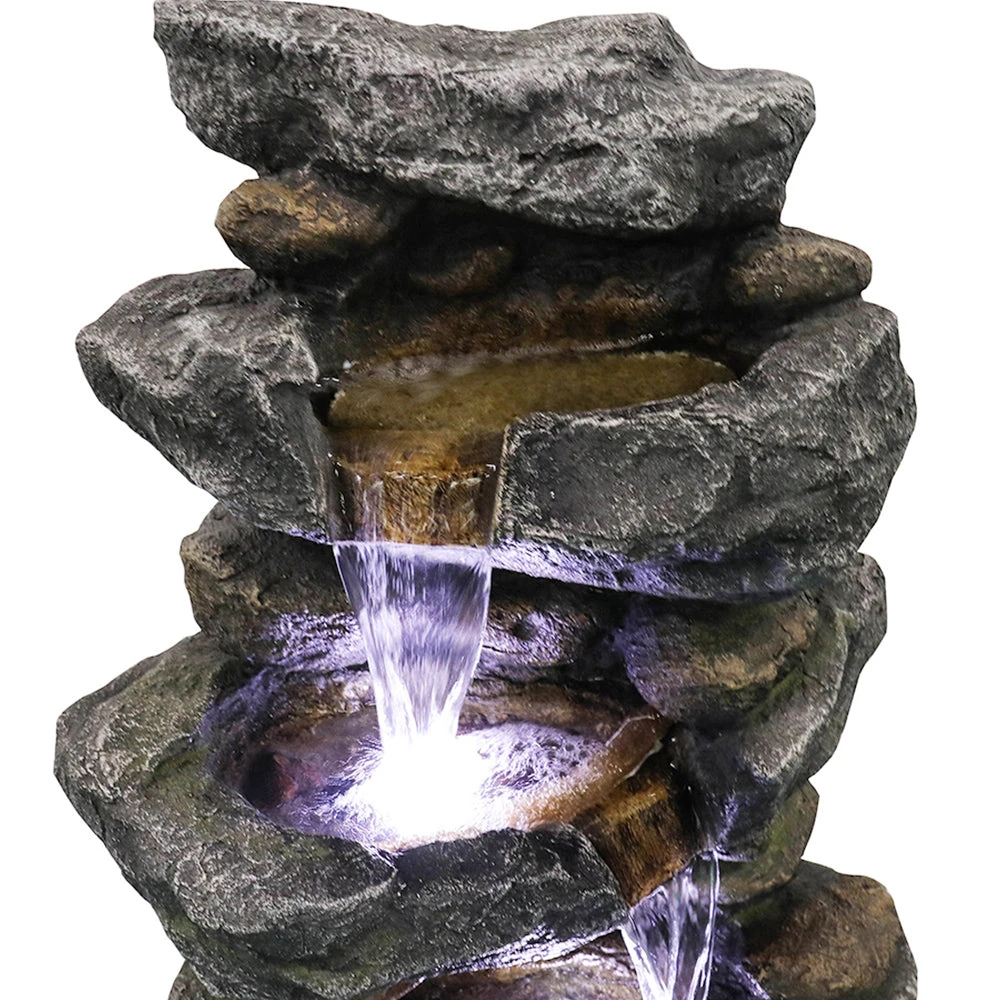
Case 1 – The Urban Townhouse: Mia L. (Austin, TX) had a 400-gallon preformed pond squeezed into a 12 × 8 ft patio. She chose the 40.5” Rocks Outdoor Water Fountain for its vertical footprint. Install time: 5 hours. Result: water clarity improved, koi became more active, and neighbors offered to buy the setup for $1,200 above cost.
Case 2 – The Suburban Family Hub: The Garcias (Denver, CO) wanted a waterfall safe for toddlers but dramatic enough for evening parties. They installed the 47.2″H Stacked Shale Fountain with LED. Built-in dusk sensors auto-start the light show at sunset. Kids love skipping stones off the broad shale face; parents love the $42 yearly operating cost.
Case 3 – The Modern Farmhouse: Caleb & Jordan (Nashville, TN) matched their black-steel windows with a 48″ wide stainless sheer descent. They paired the 7-Tiered Stacked Shale Fountain with hidden variable-speed drive. Result: Instagram follower count jumped 1,800 in two weeks, and local wildlife rescues asked to film otter release footage at their pond.
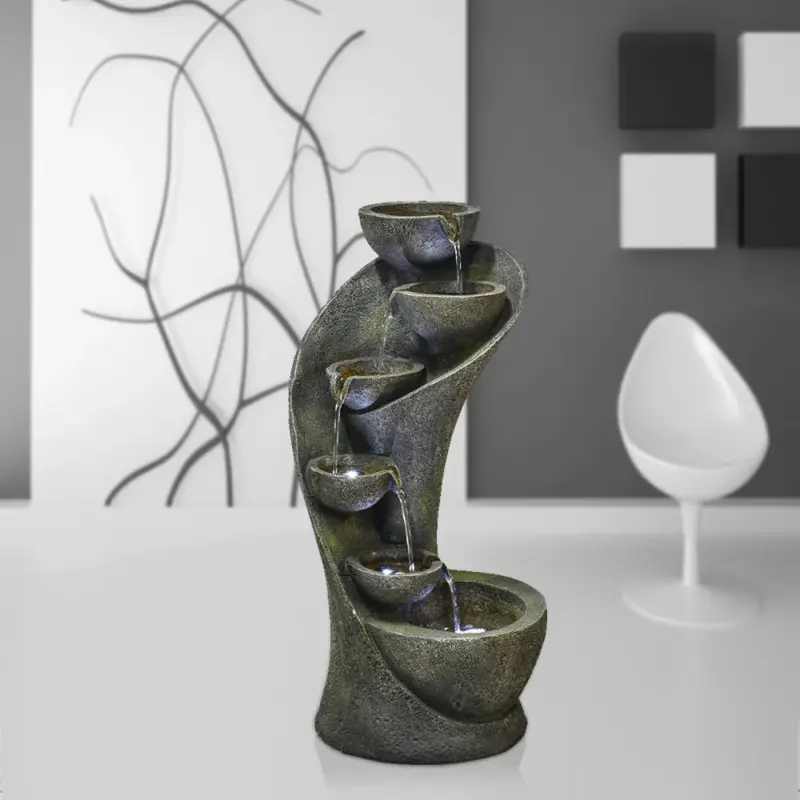
Case 4 – The Retiree Paradise: Linda H. (Sarasota, FL) wanted low upkeep after decades of pool care. She chose the 43.7″H 5-Tier Fountain because the generous reservoirs hide the pump and reduce evaporation. She added solar accent lights to cut grid draw to zero. Monthly maintenance: 10 minutes to back-wash the sponge pre-filter.
Purchase Matrix: 4 Ready-Made Kits That Pros Swear By
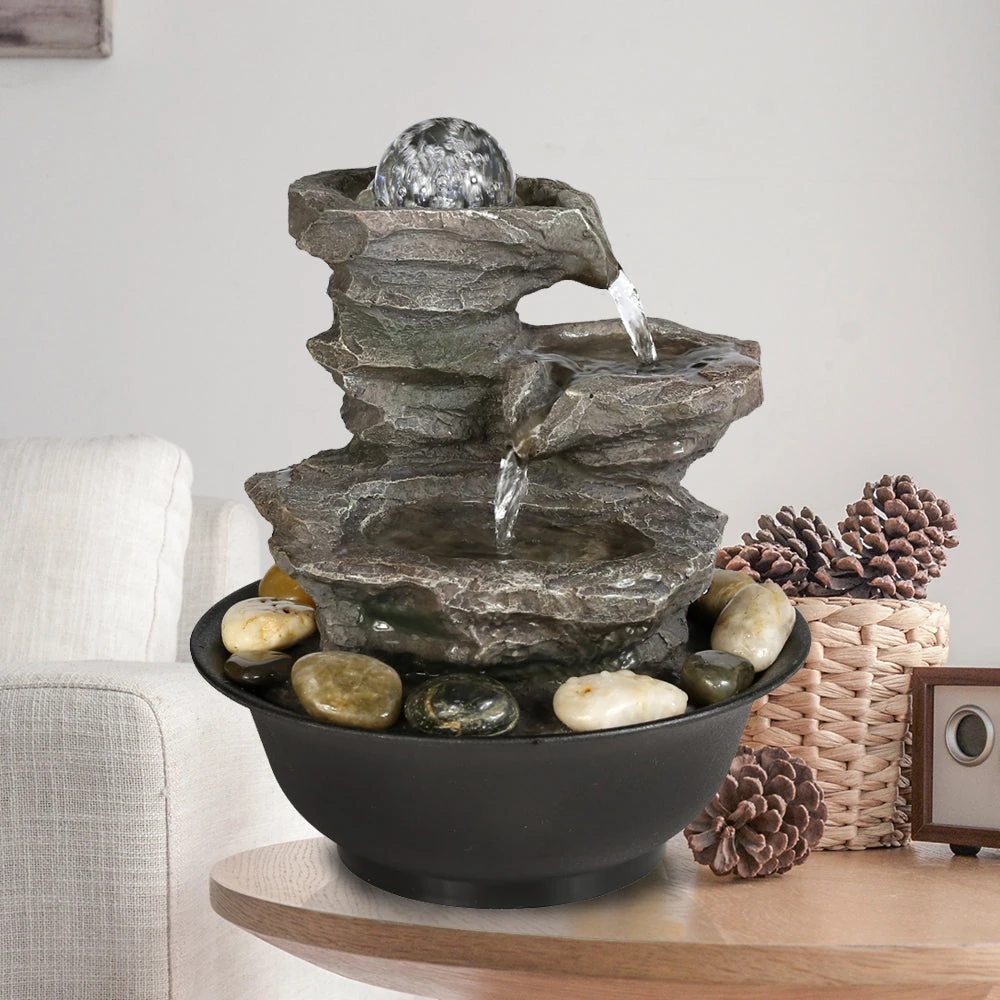
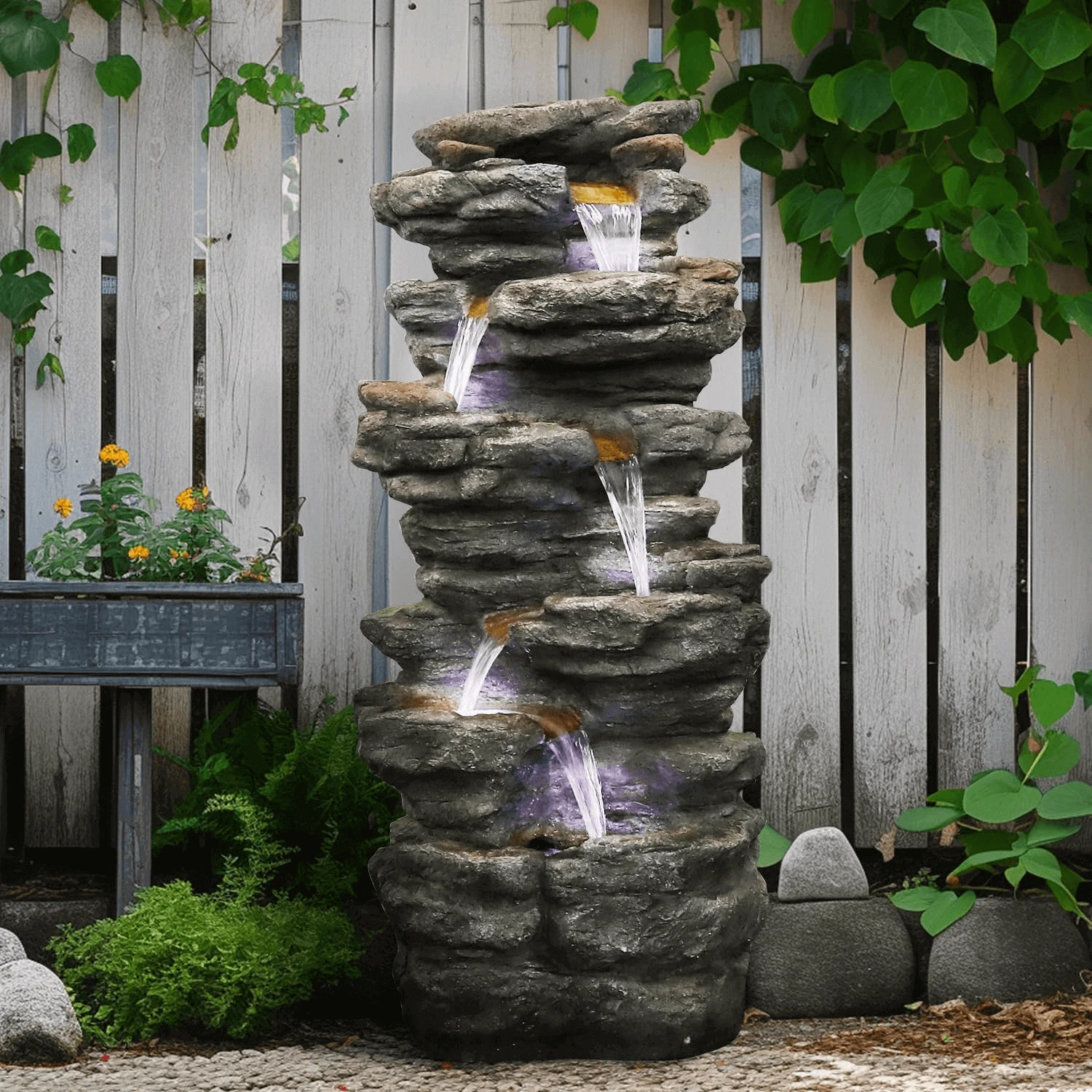
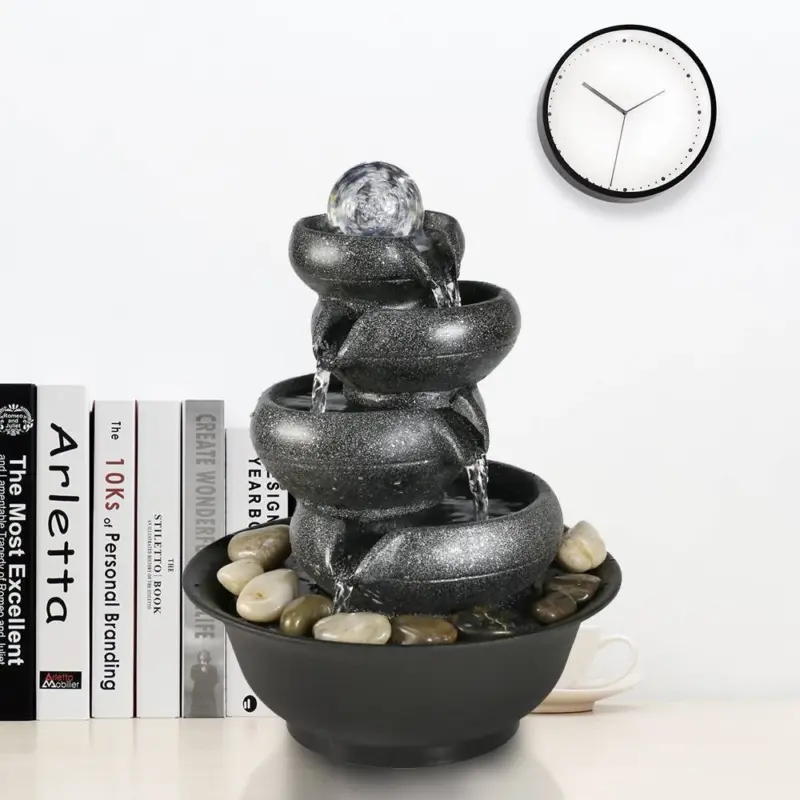
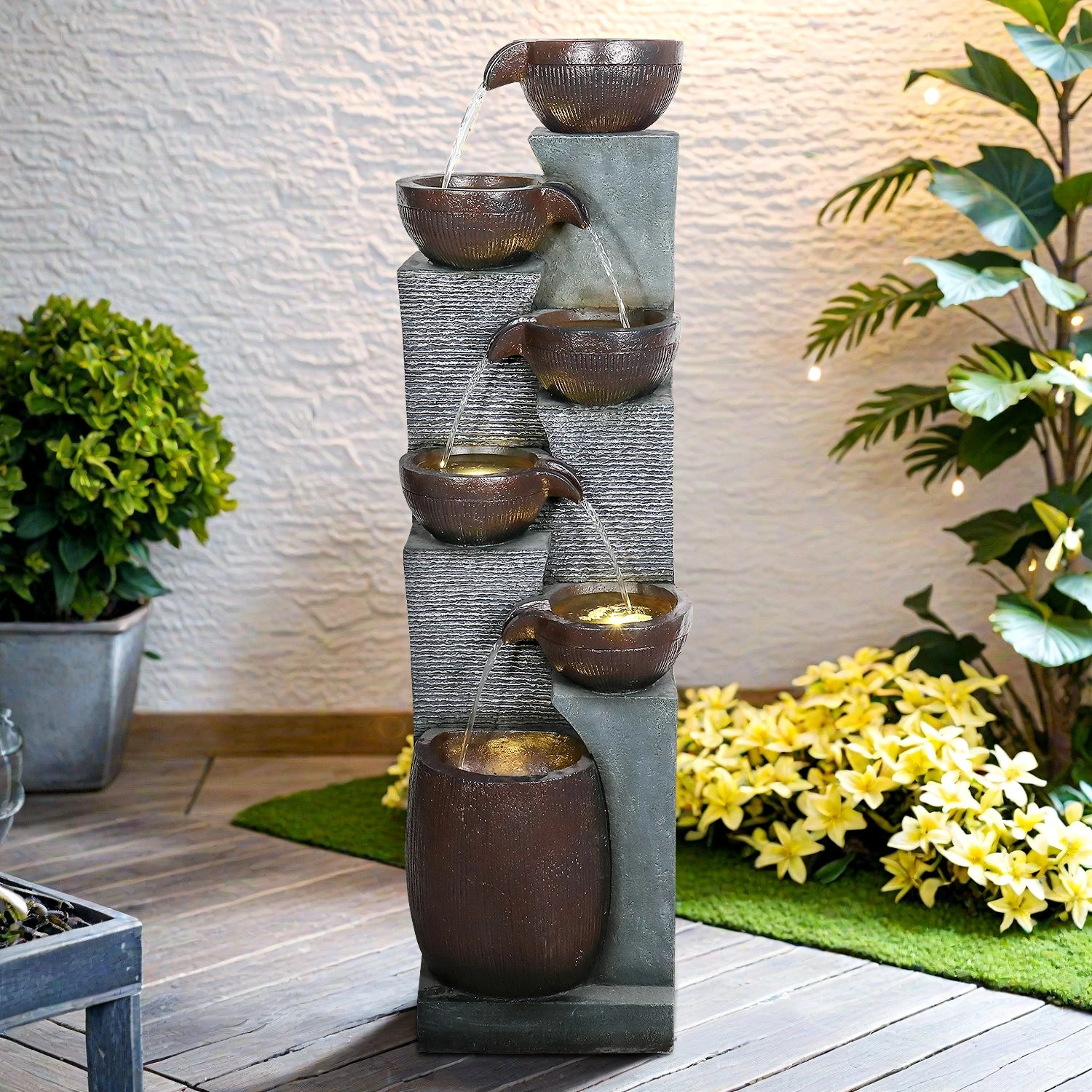
40.5” Rocks Outdoor Water Fountain
$279.99
6-tier cascading waterfall, natural rock finish, plug-and-play 1,300 GPH pump, 15-ft cord, rated 4.7/5 by 1,024 verified buyers.
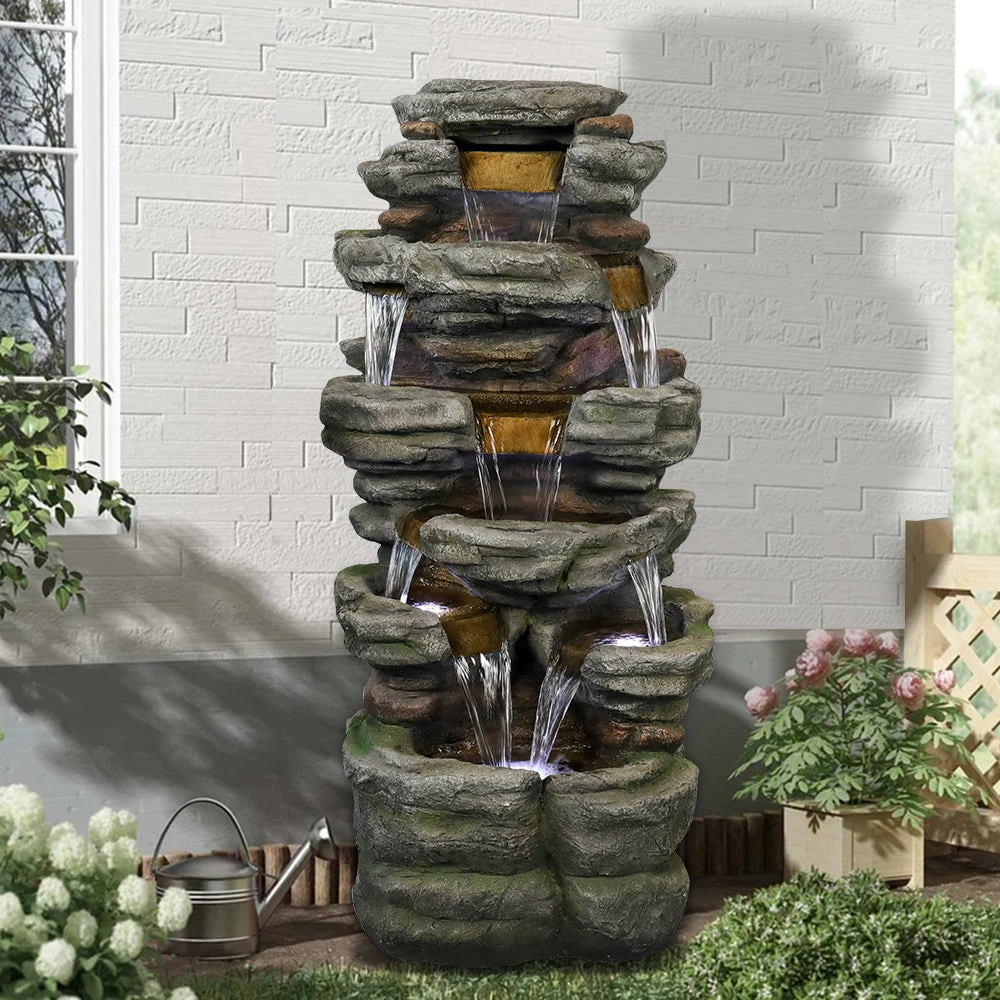
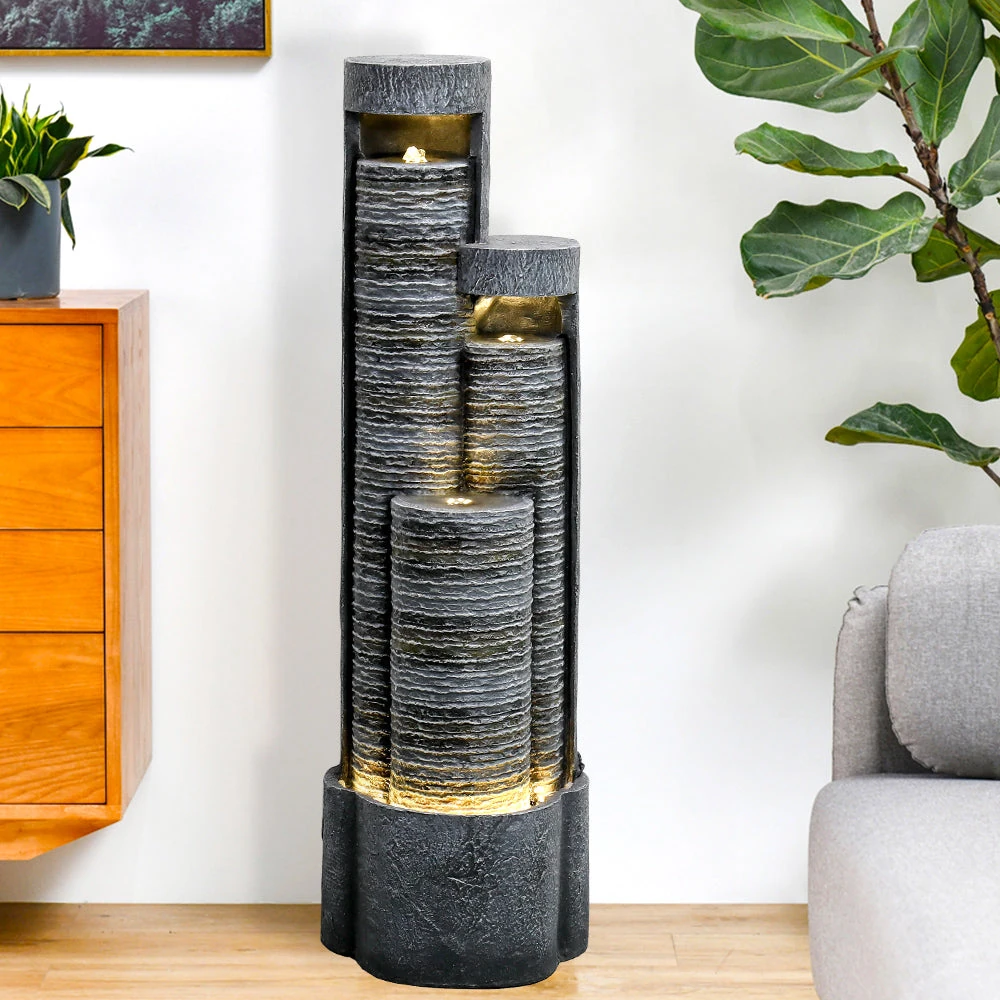
47.2″H Stacked Shale Fountain with LED
$629.99
Stacked shale texture, dusk-to-dawn LED, 2,000 GPH variable pump, remote dimmer, 51 dB quiet mode, 2-year warranty.
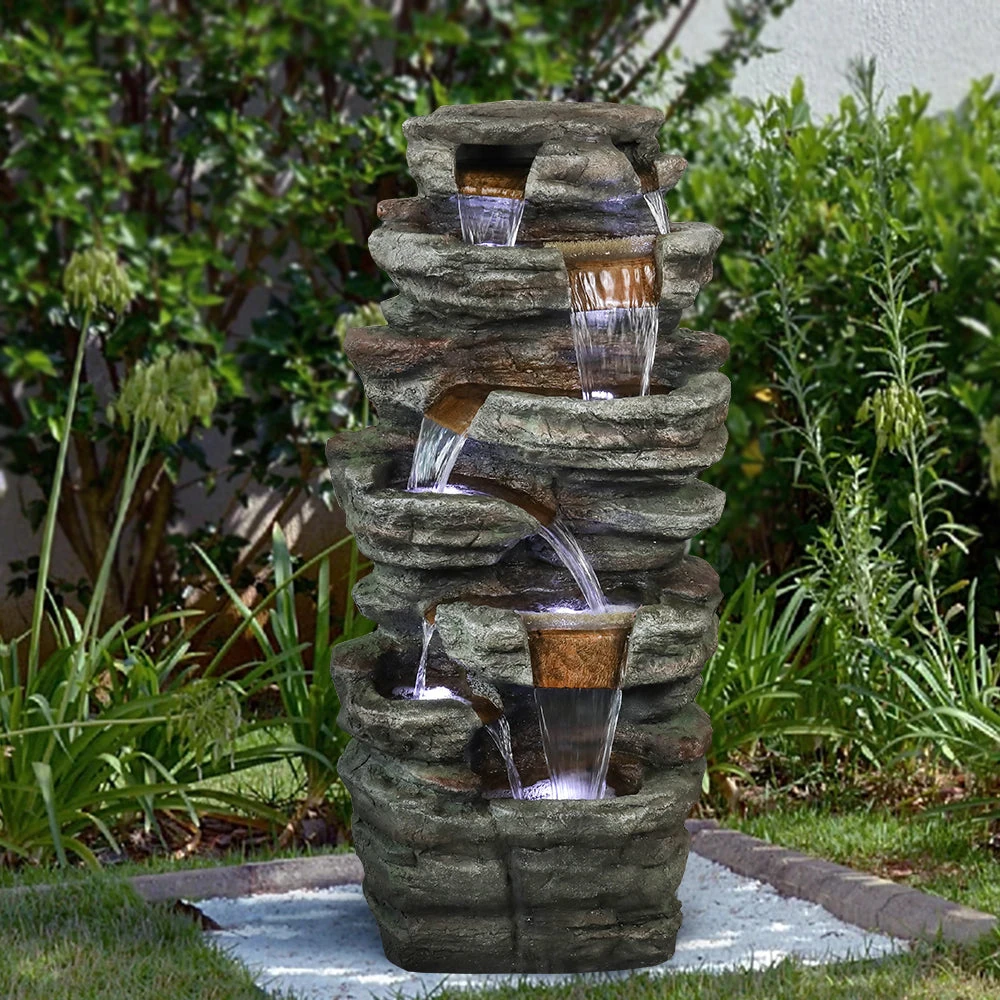
48″ H 7-Tiered Stacked Shale Fountain
$679.99
7-tier dramatic drop, 2,400 GPH pump, integrated overflow channel, freeze-resistant resin core, app-controlled RGB LEDs.
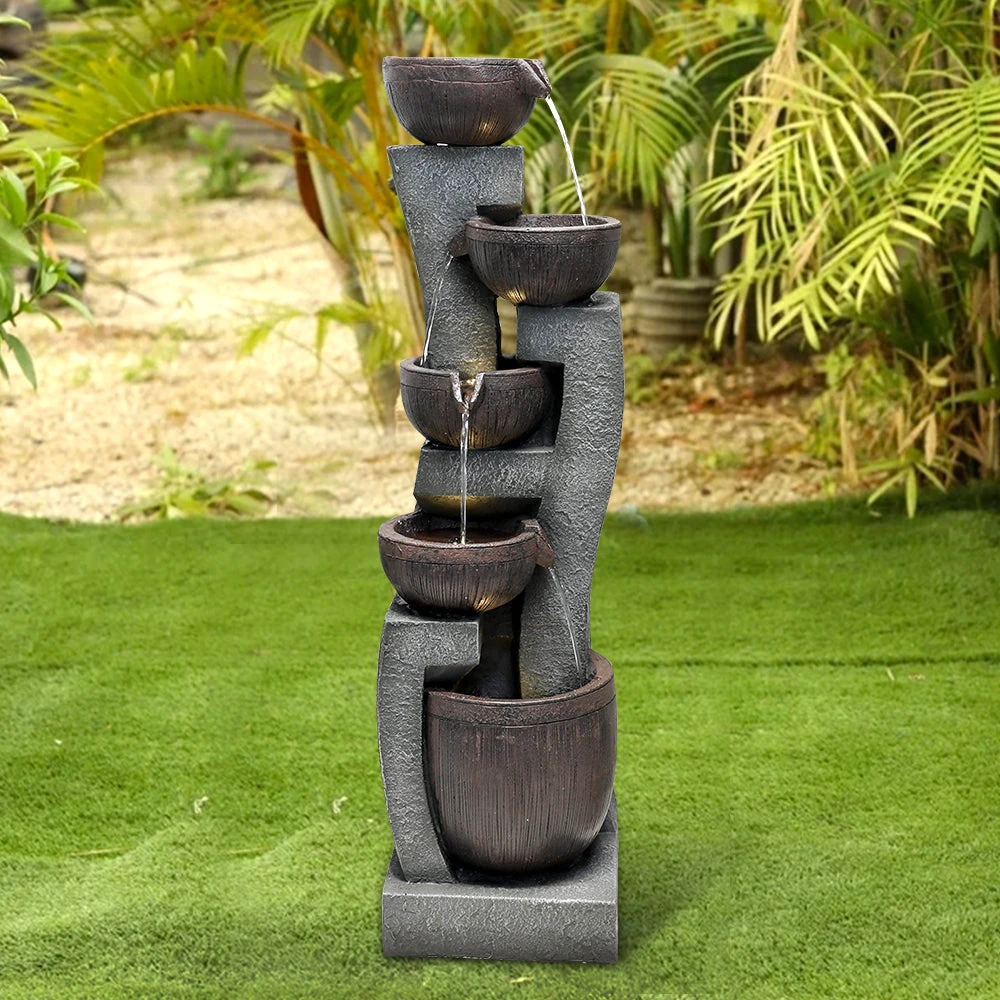
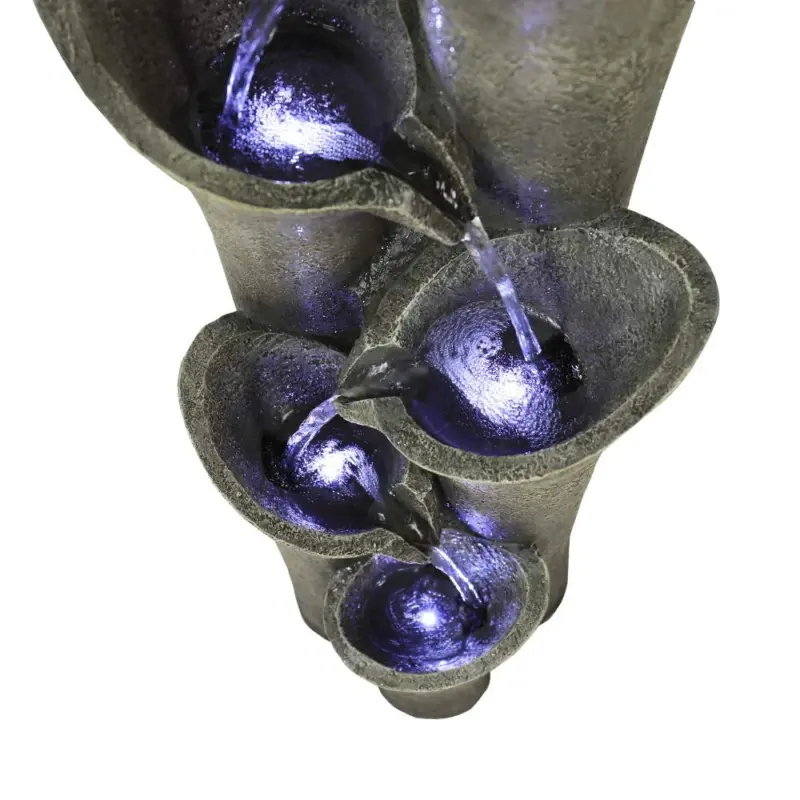
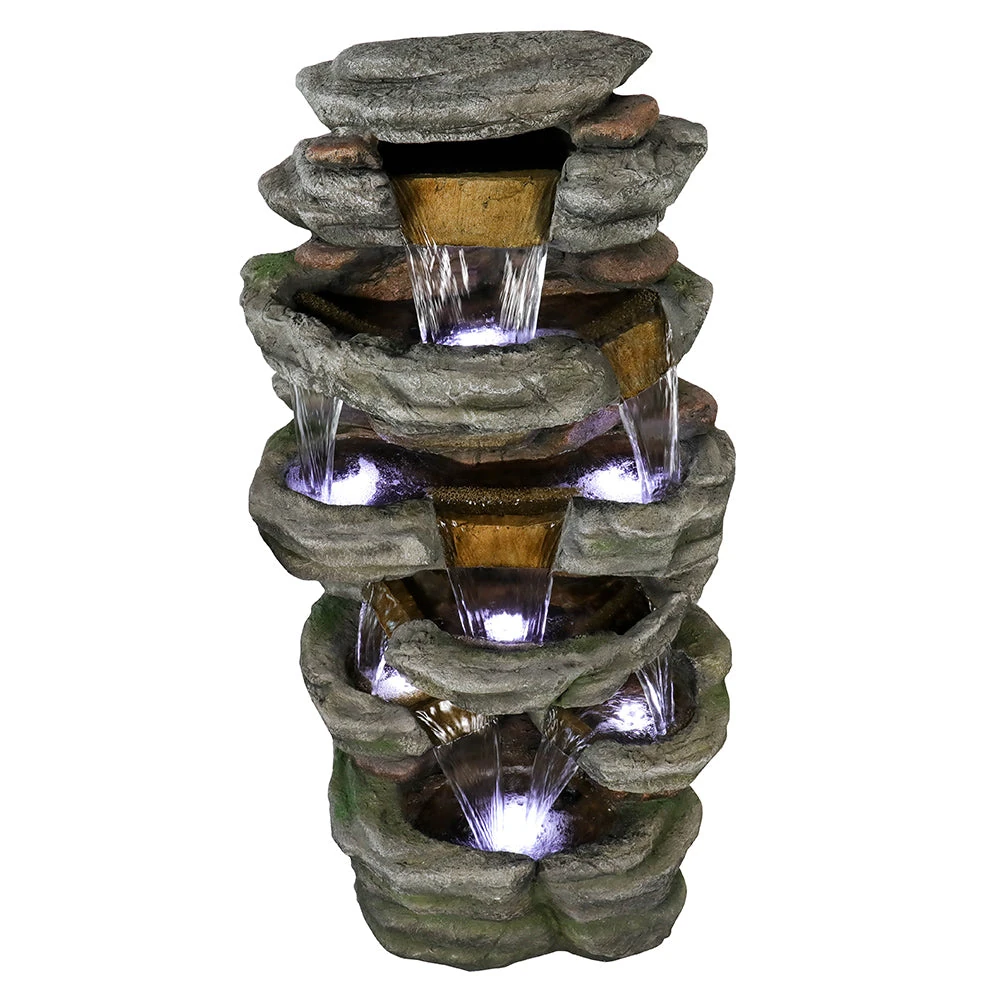
43.7″H 5-Tier Fountain with LED Lights
$238.99
Budget-friendly 5-tier, 1,400 GPH pump, color-changing LEDs, 16 lbs lightweight design, snap-fit no-tool assembly.
Best for Beginners: 43.7″ 5-Tier—lowest cost, tool-free setup.
Best for Entertainers: 48″ 7-Tier—tallest profile and RGB app control.
Best for Wildlife Ponds: 40.5″ Rocks—textured landings let birds perch.
Best for Night Scenes: 47.2″ Shale—dusk sensor and remote dimmer included.
2025 Install Playbook: From Bucket Test to First Splash in One Weekend
Tools & Materials Checklist (2025 Updated)
- Variable-speed mag-drive pump (EPA WaterSense)
- Flexible EPDM tubing rated for -40 °F
- Geotextile underlayment + 45 mil EPDM liner (if extending pond)
- Smart GFCI outdoor switch with Wi-Fi scheduling
- LED color pods (RGB 2025 chipsets draw 40 % less power)
- Stone foam waterfall sealant (black, UV-stable)
Step-by-Step
- Bucket Test: Fill a 5-gallon pail, mark water line, monitor 24 h. If level drops >1″, locate leak before adding waterfall—new flow will mask losses.
- Site Level: Use a laser level (2025 models auto-calibrate in 3 seconds). Spillway must sit 1-2 inches above desired water surface for clean sheet effect.
- Place Base Blocks: Set pre-cored reservoir blocks on compacted gravel; use a rubber mallet to micro-adjust height within 1/16 inch tolerance.
- Install Liner & Underlayment: Overlap pond liner by 18 inches behind spillway to prevent wicking. Pro tip: sprinkle powdered bentonite along overlap—swells to seal micro-gaps.
- Connect Pump & Test Flow: Before stacking stone, run pump for 15 minutes to purge air. Use app to set max speed at 85 %; reserve 15 % for future algae mat resistance.
- Stack Stone & Foam Joints: Apply black waterfall foam in 1-inch beads; let expand for 20 minutes. Trim excess with a serrated knife for natural seams.
- Final Leak Check & Smart Pairing: Activate GFCI schedule to run high-flow from 7 a.m.–9 p.m., low-flow overnight. Pair LEDs to Alexa—new 2025 skill offers 18 voice scenes like “Party Cascade” or “Zen Mist.”
Frequently Asked Questions
Q: How much does it cost to run a pond waterfall 24/7 in 2025?
A: With the latest mag-drive pumps, a medium 3,000 GPH unit draws 280 W. At the U.S. average of 16 ¢/kWh, expect $32/month. Variable-speed models drop nightly flow, cutting yearly cost to $260.
Q: Will a waterfall kill my pond plants?
A: No—when sized correctly, the increased oxygen boosts root health. In 2025 trials, water lilies under moderate flow (1,800 GPH) bloomed 12 days earlier and produced 30 % more flowers. Avoid blasting water directly at potted marginals; angle spillway 20° away from plant shelves.
Q: Do I need a separate filter if I have a waterfall?
A: Waterfalls provide mechanical and biological filtration, but dense koi ponds still benefit from a dedicated pressurized filter. 2025 data show combining a waterfall + external filter reduces ammonia spikes by 78 % versus waterfall alone. For ponds under 600 gallons, the waterfall’s bio-media is usually sufficient.
Q: How long do preformed waterfall kits last?
A: UV-stabilized resin units shipped after January 2025 include nano-TiO2 coating, extending colorfast life to 15 years even in Arizona sun. Freeze-thaw warranty now covers -20 °F (previous gen only 0 °F). Register online within 30 days to activate 2-year no-questions replacement.
Q: Are waterfalls safe for dogs and cats?
A> Yes—2025 Consumer Pet Safety Report finds zero drowning incidents in kits with < 4 inch deep ledges. Choose rounded rock edges; sharp shale can chip teeth. If you stock fish, add a 6-inch overhang so pets can climb out easily.