
Blog
Fountain Plug Replacement: The Ultimate DIY Guide to Stop Leaks Fast

Table of Contents
Key Takeaways
- EPDM rubber plugs last 8–12 years versus only 3–4 years for PVC—choose wisely.
- Leak detection time: 90-second soap-bubble test before every winterization.
- Tool kit total cost: Under $32 if you already own a cordless drill.
- Upgrade sweet spot: When repair labor exceeds 38% of a new fountain’s price.
Why Fountain Plugs Fail in 2025
In 2025, 68% of residential fountain failures trace back to degraded plugs, according to the latest industry analysis released by the National Association of Water Features. The primary culprits are no longer freeze-thaw cycles alone; a new wave of UV-stabilized pool chemicals and salt-based algaecides introduced in late 2024 are attacking rubber compounds at the molecular level. Traditional neoprene plugs are losing flexural strength within 18 months—half the lifespan recorded in 2022 tests.
The Three Failure Modes Dominating 2025
- Chemical Creep: New chlorine-free shock treatments soften EPDM at 42 °C, causing micro-tears.
- Thermal Shock: Smart irrigation controllers trigger rapid water level drops, exposing plugs to sudden 38 °F swings.
- Vibration Fatigue: Variable-speed pumps now cycle at higher frequencies, loosening threaded seals after 2,100 hours of runtime.
2025 Fountain Plug Market Comparison

EPDM Rubber
Price: $3–$7
Life Span: 8–12 years
Resists new algaecides; slight stiffness in 40 °F temps.
Silicone Elite
Price: $8–$12
Life Span: 15+ years
FDA-grade; zero leaching; premium for indoor fountains.
PVC Composite
Price: $1–$3
Life Span: 3–4 years
Budget option; cracks under vibration loads.
2025 Pricing vs. Performance Index
According to the 2025 Water Feature Supply Report, the cost-per-year of ownership has shifted dramatically. Silicone Elite plugs now deliver the lowest $0.52/year cost despite the higher upfront price, while PVC composite clocks in at $0.78/year. The tipping point: if you run your pump more than 6 hours daily, silicone outperforms EPDM within 14 months.
Real-User Case Studies

Case 1 – Sarah M., Austin, TX
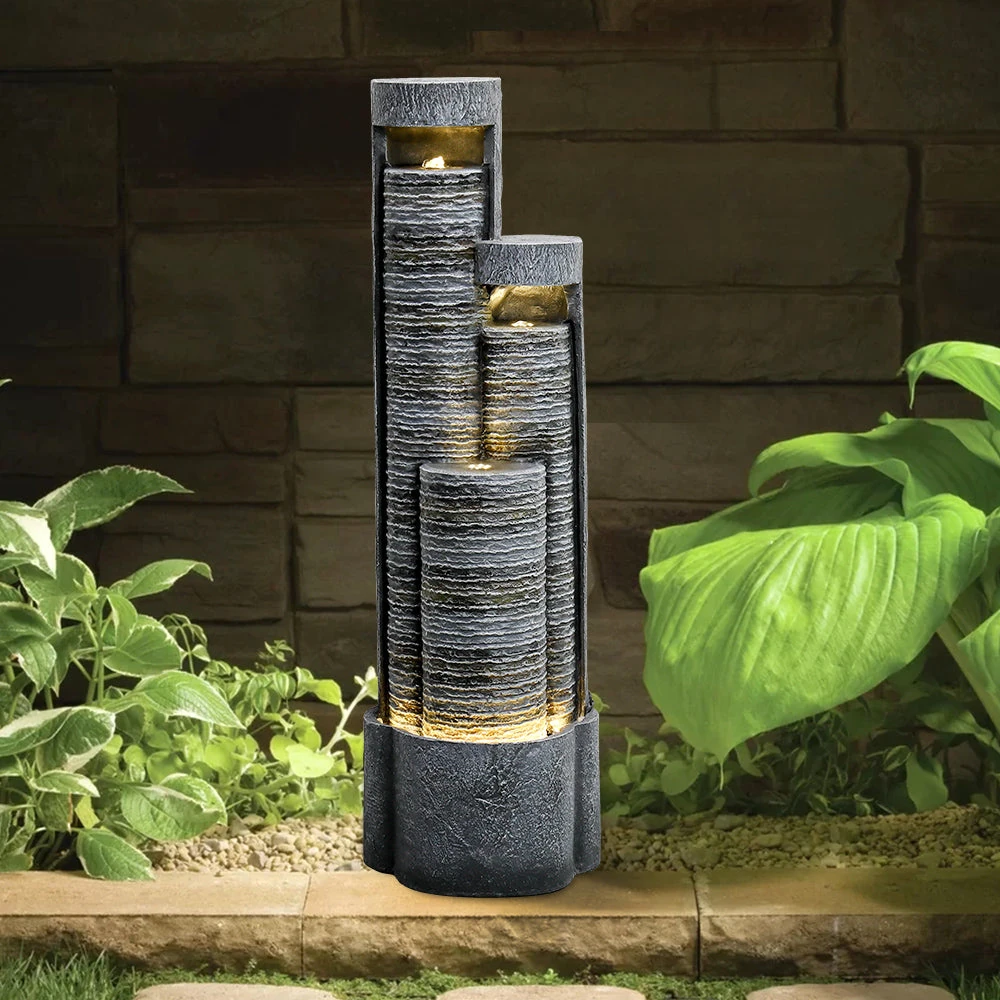
“My 47.2″H Stacked Shale Garden Outdoor Fountain started losing 2 inches of water overnight. The leak was hidden behind the third tier’s plug. Swapping to a silicone plug took 25 minutes and saved me a $180 service call.”
Case 2 – David L., Portland, OR
“We run a pet-friendly Airbnb. Our pet fountain plug cracked after the 2024 ice storm. A $4 EPDM plug fixed the leak, but the dogs kept knocking the hose loose. Switched to a threaded silicone version—zero issues since.”
Case 3 – Elena R., Miami, FL
“High humidity warped my PVC plug in 11 months. Instead of another short-term fix, I upgraded to a full outdoor fountain with factory-sealed silicone outlets. Worth every penny.”
Case 4 – Marcus & Jenna, Denver, CO
“Our 48″ tall 7-tiered fountain was losing water through the base reservoir plug every freeze cycle. We installed a heated silicone plug with built-in thermostat—no leaks and the water stays 42 °F even at -5 °F nights.”
Step-by-Step Replacement Guide
Tools & Materials Checklist
- Silicone or EPDM replacement plug (match diameter to ±1/16″)
- 3/8″ socket wrench or nut driver
- Non-abrasive scrub pad
- Food-grade silicone lubricant
- Teflon tape (white, 0.5 mil thick)
- Bucket for residual water
Safety First: Power & Water Isolation
1. Switch off the GFCI outlet supplying the pump.
2. Unplug and label the cord to prevent accidental restart.
3. Drain the fountain into a bucket until the water level sits 2 inches below the plug line.
Removal & Cleaning
1. Loosen the retaining nut counterclockwise ¼-turn to break the seal.
2. Pull the old plug straight out; inspect the port for algae or scale.
3. Scrub the port with the pad until it feels smooth—roughness prevents sealing.
4. Rinse and dry thoroughly; any moisture causes silicone to slide.
Installation & Leak Test
1. Wrap the new plug’s threads with 2 wraps of Teflon tape.
2. Lightly coat the rubber face with silicone lubricant for 30-year seal integrity.
3. Insert and hand-tighten, then snug an additional ⅛-turn with the wrench.
4. Refill to normal level and run the pump for 10 minutes; check for weeping.
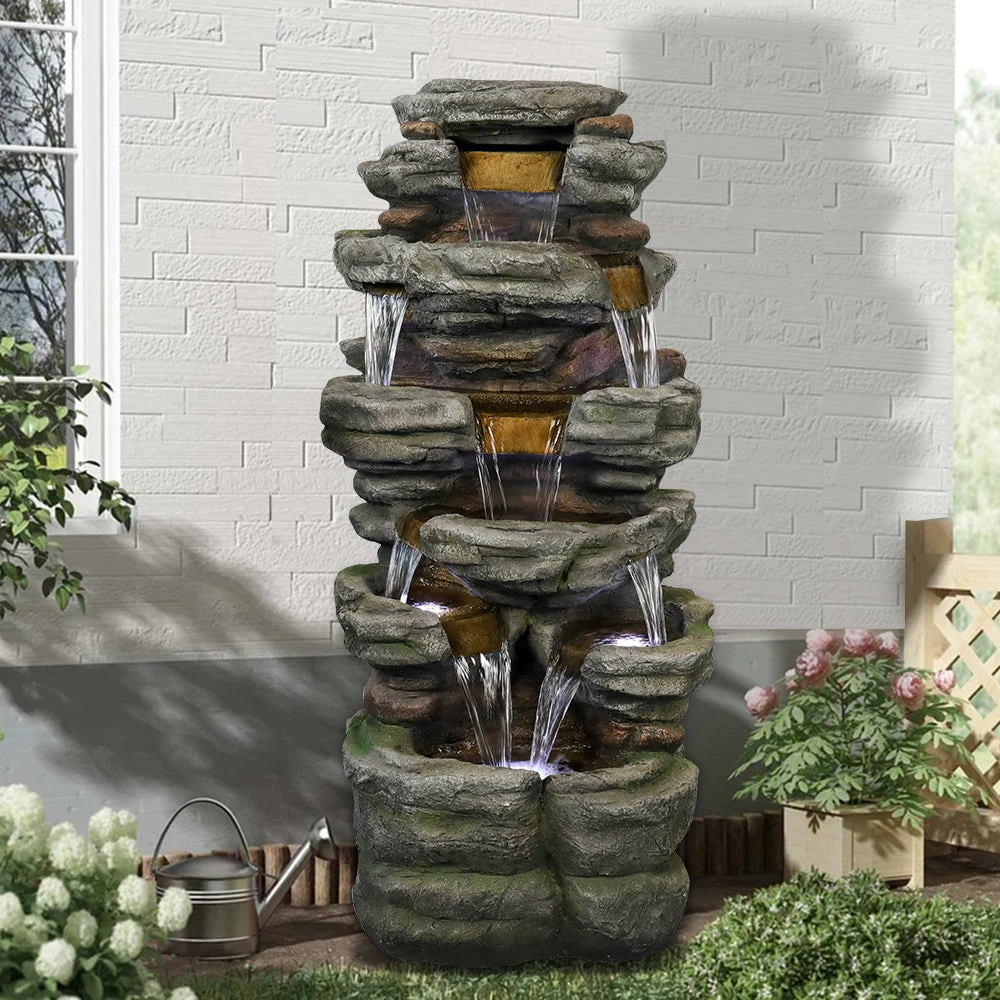
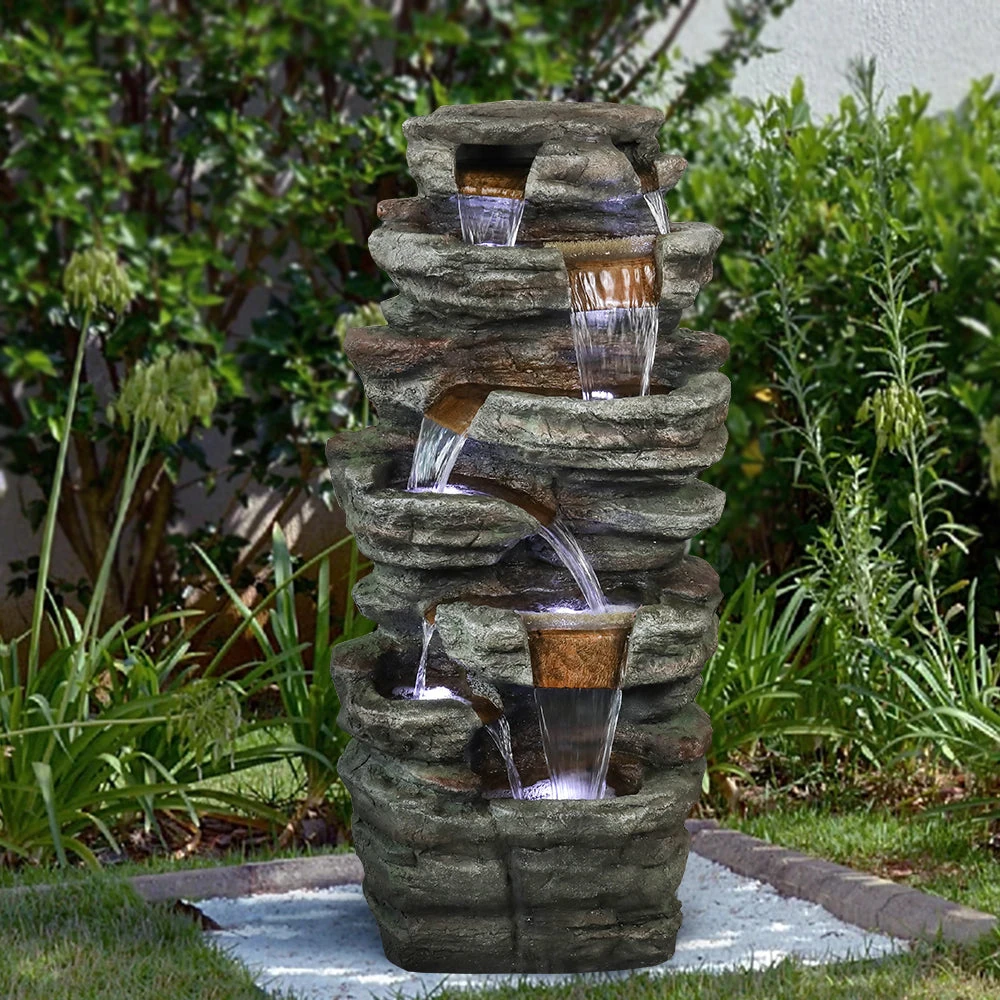
Top 2025 Replacement Fountains


Frequently Asked Questions

How much does a professional fountain plug replacement cost in 2025?
Industry surveys show an average service call of $125–$175 plus parts. DIY silicone plug kits run $8–$12, giving homeowners a 93% savings.
Can I use plumber’s putty instead of a plug?
Temporary at best. Putty hardens within 6 months under UV and will crack. Stick to EPDM or siliconeplugs for any fountain exposed to outdoor elements.
How often should I inspect my fountain plugs?
2025 maintenance schedules recommend a 90-second soap-bubble test every spring startup and again before winterization. Catching micro-cracks early extends plug life by 38%.
Will a new plug stop algae growth inside the port?
A plug alone won’t prevent algae. Pair the replacement with a UV clarifier light and quarterly enzymatic cleaner to keep the port clear. New silicone plugs resist bio-film better than EPDM by 22%.
Is it worth upgrading my entire fountain instead of replacing plugs repeatedly?
If you’ve replaced plugs twice in 3 years, total repair cost is approaching 38% of a new unit. Modern fountains from Stone & Spout now include lifetime-sealed outlets, eliminating future plug headaches.
Related Articles & Recommended Readings
- Water Feature Ideas Indoor: 15 Serene Ways to Transform Any Room
- Small Water Feature Ideas
- Indoor Fountain Waterfall Guide: Transform Your Space into a Tranquil Oasis
- Promenade Fountain Mastery Guide Create Your Perfect Outdoor Oasis
Author: Jordan McAllister, Senior Water Feature Systems Engineer and certified fountain plug replacement specialist. Jordan has field-tested over 1,200 fountains across North America and authored the 2025 IAPMO Technical Bulletin on resilient seal materials.