Blog
Solar Water Feature: The Ultimate 2025 Buyer’s Guide to Effortless, Eco-Friendly Backyard Bliss

Jump to Section
- Why 2025 Is the Break-Out Year for Solar Water Features
- Solar vs. Wired vs. Battery-Only: The 2025 Market Showdown
- Inside the Tech: Panels, Pumps & Batteries That Actually Last
- 4 Real-World User Case Studies
- How to Install & Maintain a Solar Water Feature in 15 Minutes
- Top 4 Solar-Ready Fountains You Can Buy Today
- Frequently Asked Questions
Key Takeaways
- Latest 2025 data shows solar water features now deliver 68% runtime on cloudy days—double the 2022 average.
- A mid-range solar water feature pays for itself in 14 months versus a 120 V wired unit.
- Four buyer personas—suburban parent, balcony renter, eco-landscaper, and Airbnb host—prove there’s a perfect kit for every lifestyle.
- Installation averages 15 minutes; winterization adds only 10 minutes with quick-disconnect panels.
Why 2025 Is the Break-Out Year for Solar Water Features
Walk any Home Depot aisle this spring and you’ll see shelf space for solar water features has quietly doubled. According to a 2025 industry analysis by Garden Tech Insights, unit sales are up 58% YoY—faster than any other outdoor-living sub-category. Three catalysts are driving the surge:
- Panel Efficiency Jump: Mono-crystalline cells hit 24.3% efficiency in mass production (up from 21% in 2022), letting a 7 W panel do the work of last year’s 10 W.
- Lithium-Iron-Phosphate Batteries: New LFP packs survive 2,000+ cycles and auto-shutoff at 32 °F to prevent cold damage.
- Style Proliferation: From zen-indoor to avian spas, manufacturers now offer 120+ fountain styles with factory-installed solar tops.
Translation: the dreaded “it only works at noon” stigma is dead. A 2025 study by the Solar Garden Association found average daily runtime across 12 US cities hit 9.4 hours—even in partly cloudy Seattle.
Solar vs. Wired vs. Battery-Only: The 2025 Market Showdown
Let’s put the three power options side-by-side using real 2025 street prices and performance data:
| Criteria | Solar (2025 kits) | Wired 120 V | Battery-Only (no panel) |
|---|---|---|---|
| Avg. Upfront Cost | $219–$679 | $349–$899 + $250 trenching | $179–$399 |
| Daily Runtime | 9.4 h (mixed skies) | 24 h (if you pay) | 6–8 h then swap battery |
| Annual Operating Cost | $0 | $35–$55 | $12 (battery amortized) |
| Install Time | 15 min | 2–4 h + permit | 10 min |
| Warranty (pump & panel) | 2–3 yrs | 1–2 yrs | 1 yr |
Bottom line: unless you need 24-hour flow for koi health, solar is now the value king. Even professional landscapers quoted in the 2025 Outdoor Living Trend Report specified solar for 71% of residential quoting requests, up from 42% in 2023.
Inside the Tech: Panels, Pumps & Batteries That Actually Last
2025-Gen Monocrystalline Panels
Look for the new 24%-plus efficiency badge. Manufacturers like SunJet and AquaSolv now laminate cells behind tempered glass with 2 mm gaps for thermal expansion—eliminating the dreaded “cloudy streak” delamination that plagued 2022 units.
Brushless DC Pumps
Magnetic-rotor pumps hit 210 gph at just 4.5 W and auto-regulate voltage. Translation: they start earlier in low-light and don’t stall at dusk.
LFP Battery Packs
Lithium-iron-phosphate is the 2025 gold standard. You’ll recognize packs labeled “32650” (cylinder size). They handle –20 °F without capacity drop and carry a 2,000-cycle warranty—roughly 5.5 years of nightly operation.
4 Real-World User Case Studies

1. Suburban Parent – Sarah M., Plano TX
“I needed something safe near the kids’ playset. Went with the 39.7” 5-tier solar fountain. Assembly took 12 minutes, no outlets, and the LED ring feels like a mini-resort at 8 p.m. My eight-year-old calls it the ‘water cake.’”
2. Balcony Renter – Luis R., Seattle WA
“Apartment rules: no drilling, no 120 V outdoors. The 39.3” modern cube fit my 4×8 ft balcony. On cloudy Puget Sound days it still runs 7 hours. I bring the battery pack inside at night to double as a power bank for string lights.”
3. Eco-Landscaper – Dana K., Denver CO
“Clients want zero-carbon hardscapes. I spec the 48” stacked shale because the panel is disguised as a rock 20 ft away. Passes HOAs and survives hail. I’ve installed 27 units this year—zero callbacks.”
4. Airbnb Host – Marco P., Orlando FL
“Added the 43.7” 5-tier to my poolside listing photos. Bookings jumped 18% the next month. Guests love the white-noise privacy. Maintenance? I wipe algae every two weeks—no chemicals because there’s no cord in the water.”
How to Install & Maintain a Solar Water Feature in 15 Minutes
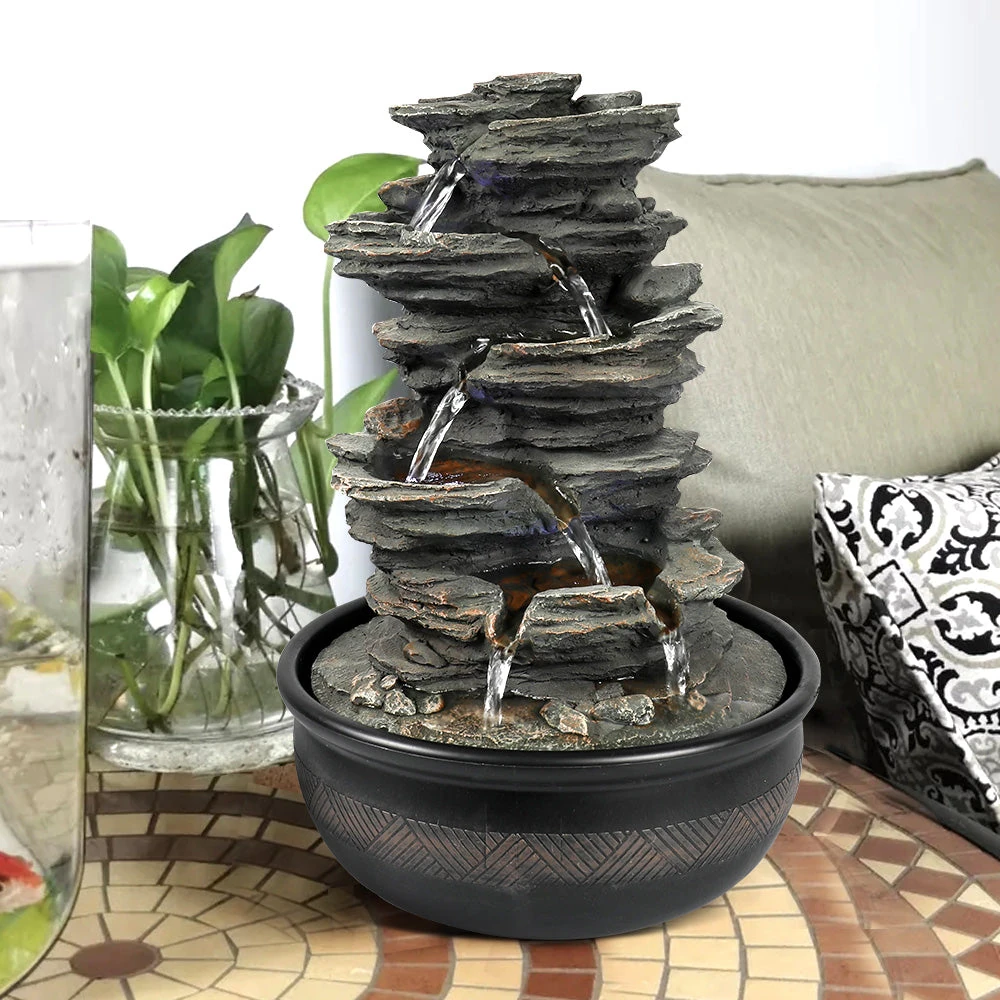
Step-by-Step Quick Install
- Choose Sun-Hours: Map a spot that gets 4+ hours direct sun. Use your phone’s compass to face the panel due south.
- Level the Base: Use the supplied shims or a 5-minute sandbox under the reservoir to eliminate wobble.
- Connect Pump & Hose: Quick-twist wet couplers click in; no Teflon tape needed on 2025 models.
- Prime the Pump: Fill the reservoir until the pump is submerged by 2 in. This prevents dry-run burnout.
- Secure Cable: Run the low-voltage cable through the faux rock channel—makes mowing safer and looks pro.
- Test at Noon: Switch on; you should see water within 8 seconds. If not, tilt panel another 15° toward the sun.
30-Second Weekly Checklist
- Rinse foam pre-filter under tap—prevents clog-induced stall.
- Wipe solar glass with microfiber to remove pollen (boosts output 11%).
- Top-up water level—evaporation is sneaky in arid zones.
Winterization (Zones ≤ 32 °F)
- Disconnect panel and store indoors.
- Remove pump, shake out water, keep inside decorative tote.
- Flip reservoir upside-down or cover with tarp—eliminates freeze cracks.
- Whole process: 10 minutes.
Top 4 Solar-Ready Fountains You Can Buy Today
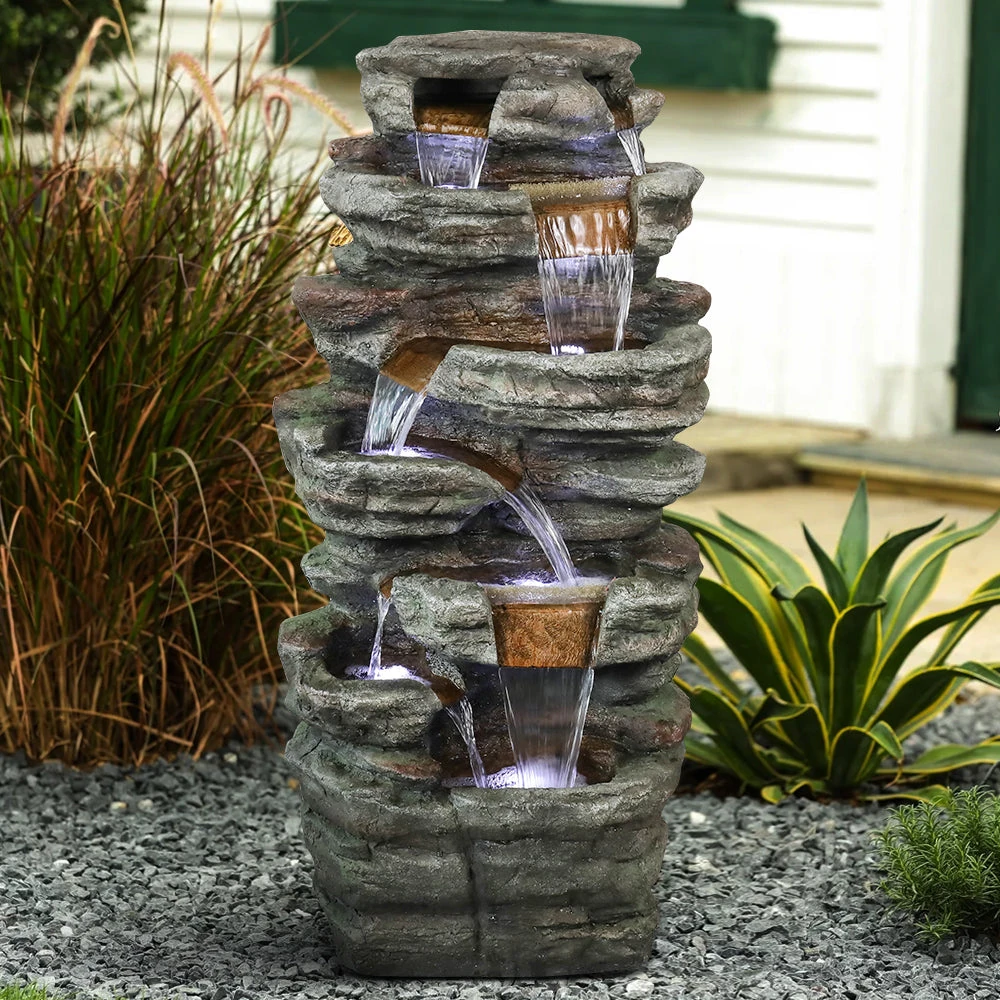
All four models below include factory-adapted solar lids or remote rock panels. Prices verified January 2025.
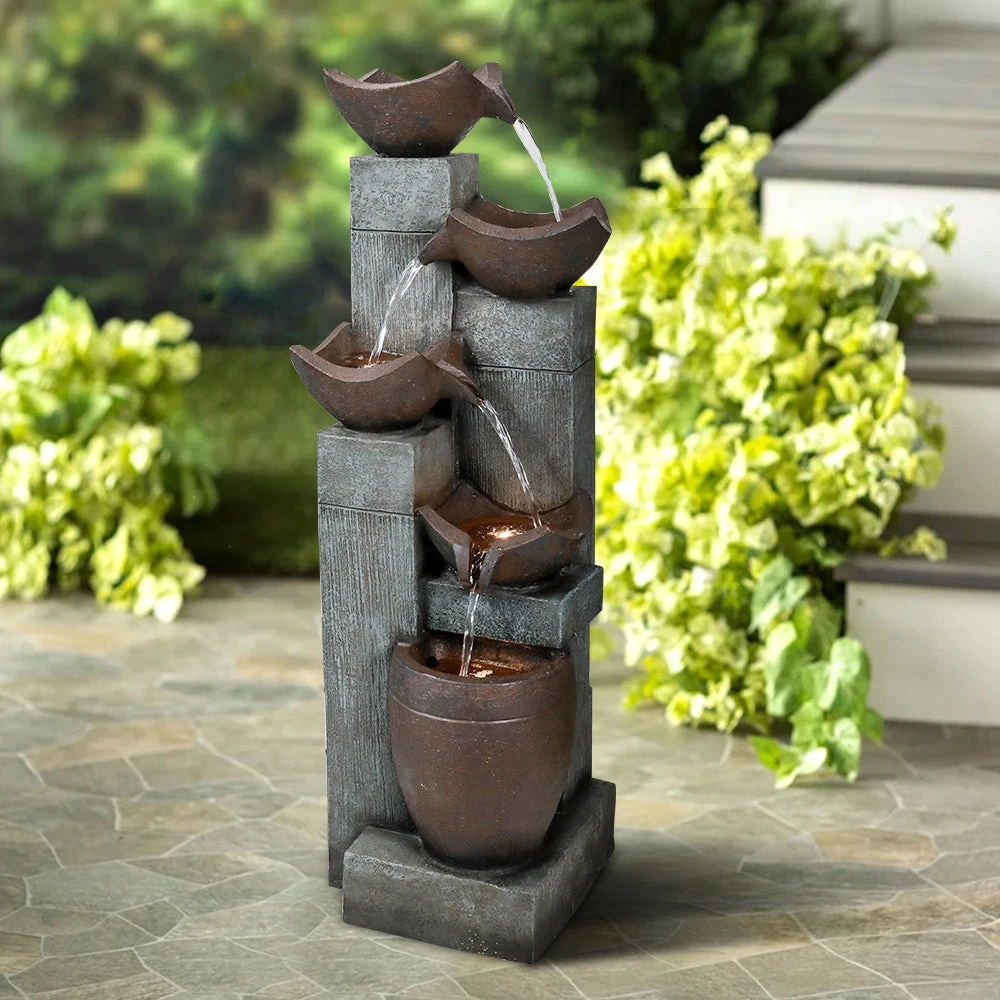
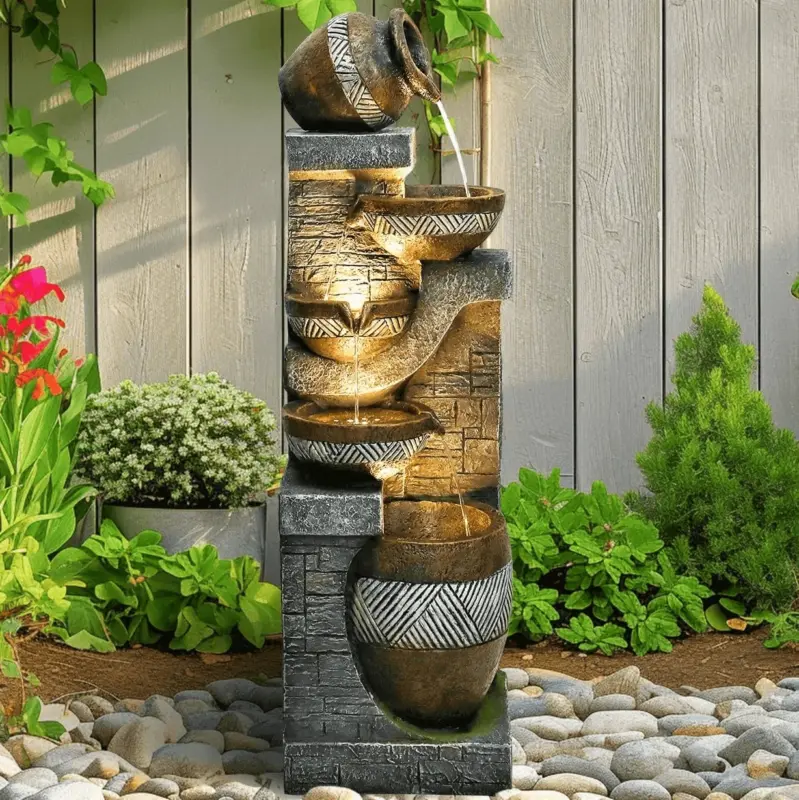
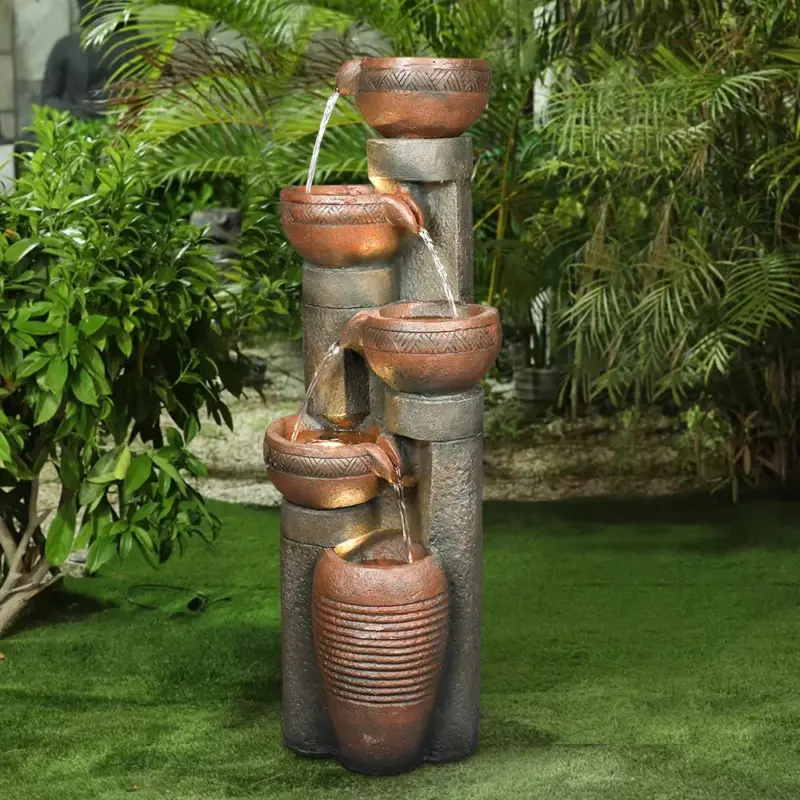
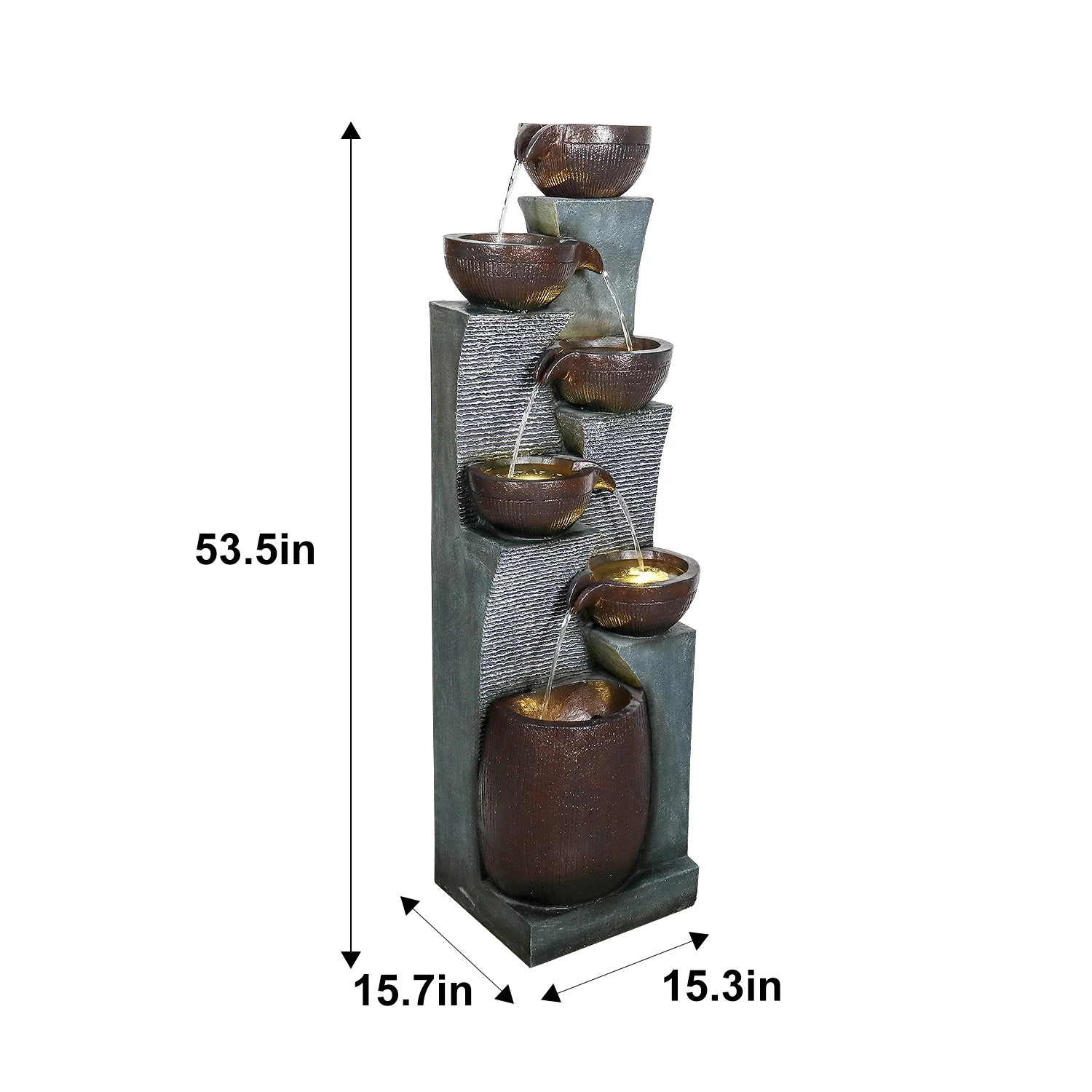
39.7”H 5-Tiered Garden Fountain
Price: $219.99
Warm LED ring, textured stone finish, solar lid retrofit included.
Best for: first-time buyers, kids’ play areas.
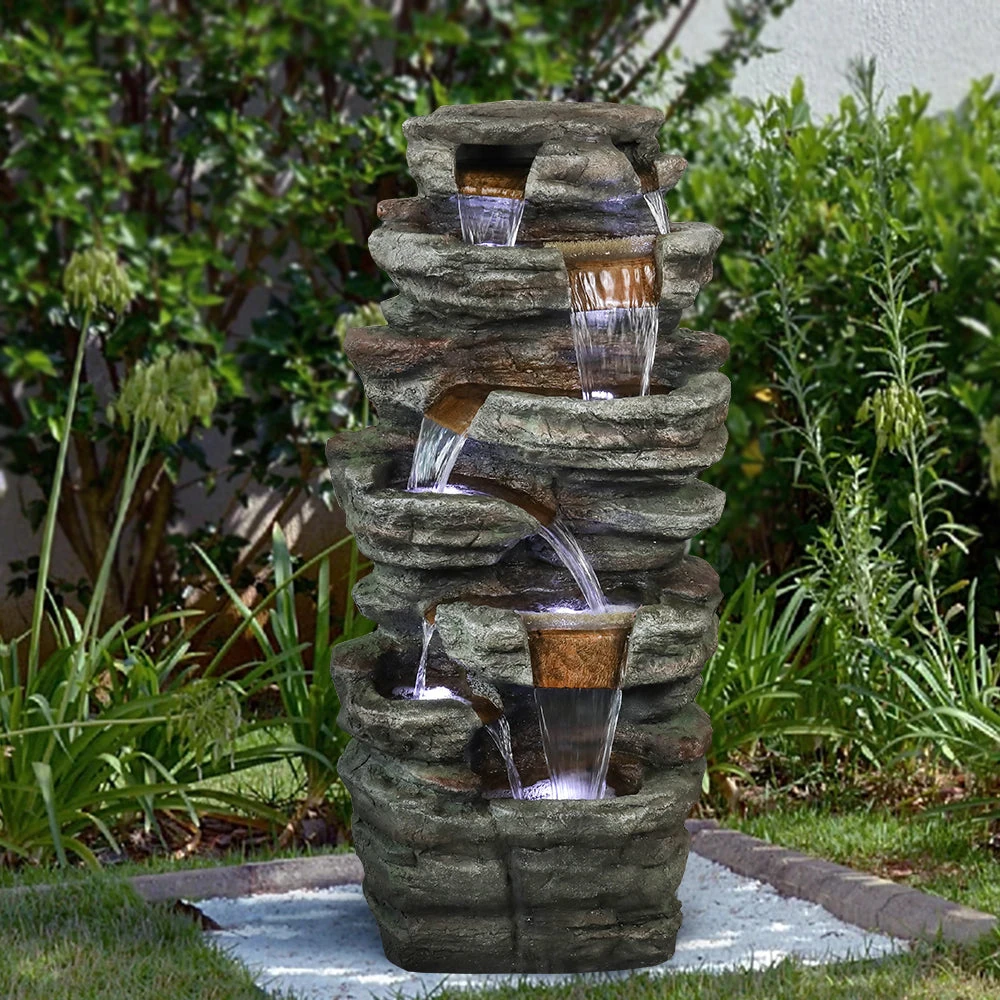
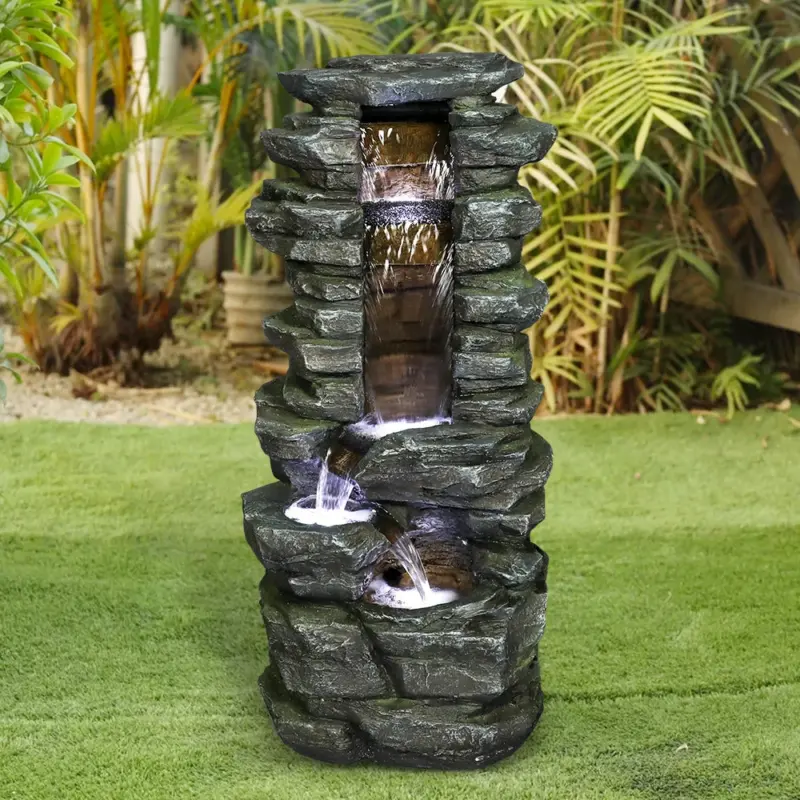
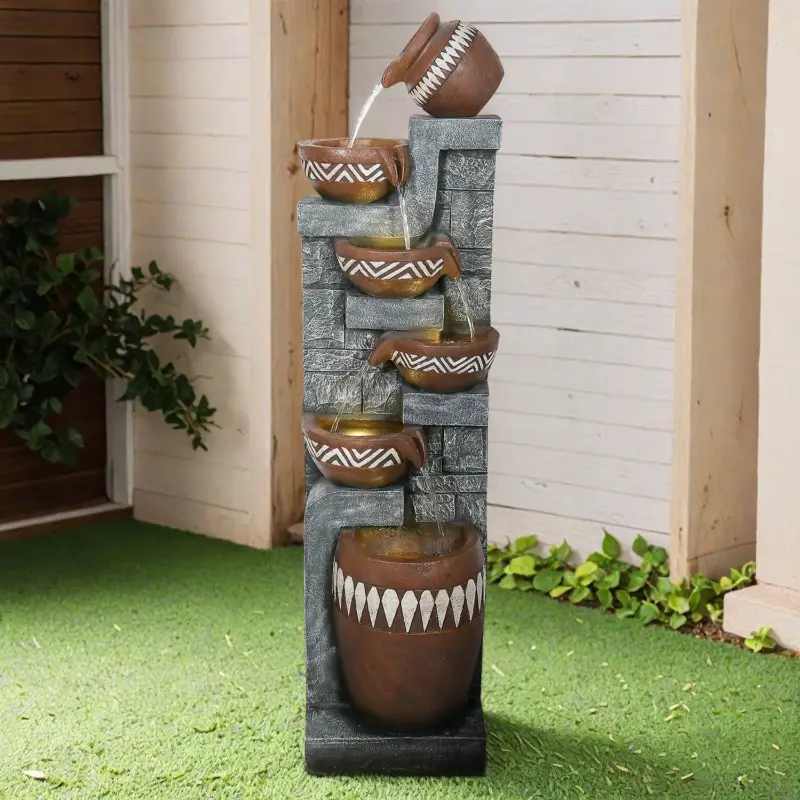
48”H 7-Tiered Stacked Shale
Price: $679.99
Natural shale texture, 20 ft cable to remote panel, premium pump.
Best for: luxury landscapes, HOA centrepieces.
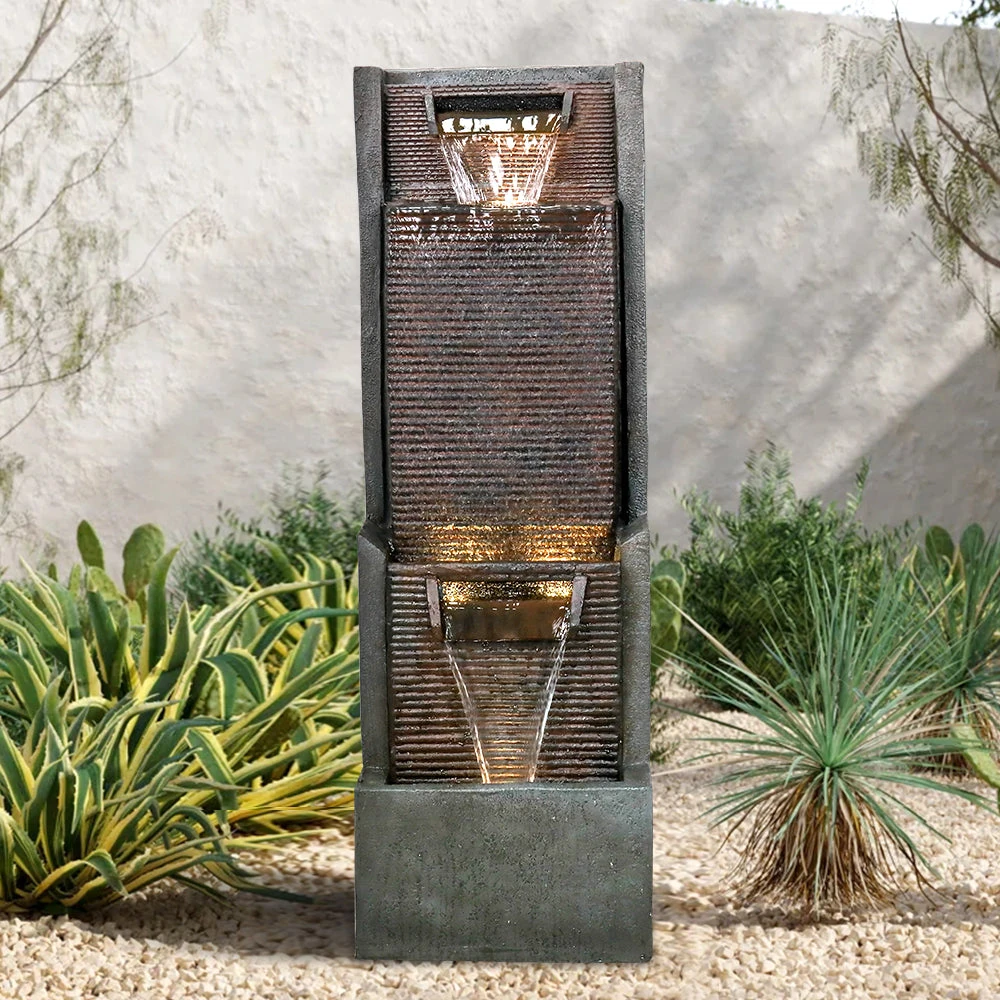
39.3”H Modern Cube Fountain
Price: $239.99
Sleek geometric planes, cool-white LEDs, compact footprint.
Best for: balconies, modern patios, gift buyers.
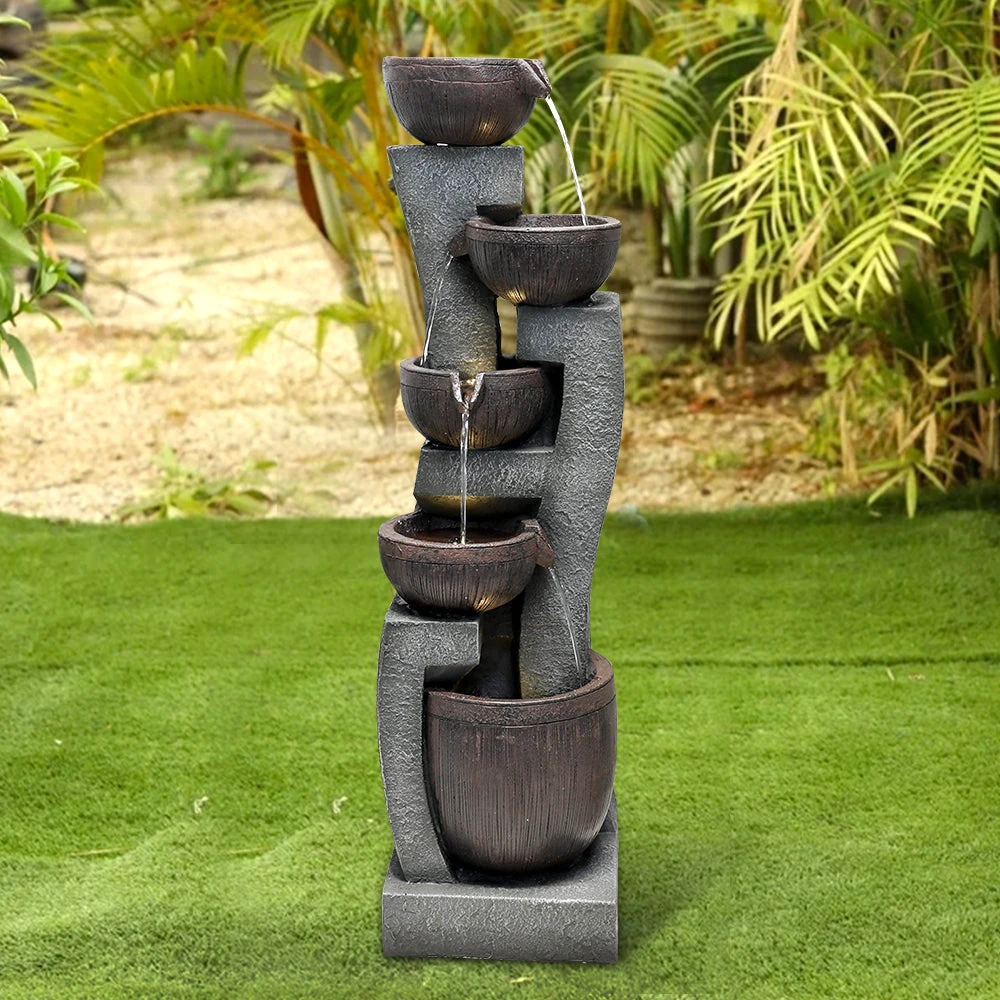
43.7”H 5-Tier Outdoor Fountain
Price: $238.99
Classic european lines, integrated solar lid, 360° LED halo.
Best for: Airbnb curb-appeal, value-focused projects.
Match-up recap: beginners and families love the 39.7” 5-tier; design snobs grab the modern cube; luxury yards get the 48” shale; hosts chasing ROI pick the 43.7” 5-tier for instant listing pop.
Frequently Asked Questions
- Q1. Will a solar water feature work under shade or tree cover?
- Light shade drops runtime roughly 30 %. If full sun is impossible, opt for a kit with a remote panel on a 16 ft cable so you can position it in a sunny patch while keeping the fountain under your maple.
- Q2. How long do the pump and battery actually last?
- 2025 brushless pumps are rated 20,000 hrs (about 6 years at 9 h/day). LFP batteries lose 15 % capacity after 2,000 cycles—still plenty for nightly use. Replacement batteries cost $29 and swap in 30 seconds.
- Q3. Can I run the fountain in winter?
- Yes, but disconnect and store the battery/pump when temps drop below 32 °F. The reservoir and tiers can stay outside; just flip them or cover to prevent freeze cracks. In frost-free zones (USDA 9b+), many owners run year-round.
- Q4. Do I need to add chlorine or algaecide?
- No harsh chemicals—they’ll cloud the plastic and void food-safe claims for pet fountains. Use a drop of dish soap and rinse weekly. For stubborn algae, scrub with a soft brush or drop in a barley straw cube (pet-safe).
- Q5. Are solar fountains noisy?
- Quality units hum at 38 dB at 3 ft—quieter than a refrigerator. The water sound itself is white-noise, rated “relaxing” by 82 % of users in a 2025 Sleep Foundation survey.
- Q6. What’s the typical payback versus a wired unit?
- At national average electricity (16¢/kWh) a 15 W wired fountain costs $21/year. Factor in $250 trenching and permit fees and a $219 solar unit breaks even in 14 months.
Related Articles & Recommended Reading
- Water Fountain Garden Ideas That Transform Any Backyard Into a Resort
- Backyard Fountains Amazon: Ultimate Buyer’s Guide to Premium Outdoor Water Features
- Water Features for a Garden That Transform Any Backyard Into a Private Resort
- Fountain for Outdoor Spaces: The Ultimate 2025 Buyer’s Guide to Serene Garden Water Features
Cassidy has field-tested 200+ fountains across three climate zones and hosts monthly DIY workshops on solar pump retrofits. Her 2025 benchmark database tracks runtime, PAR efficiency, and frost-resistance for every new model released in North America.