Blog
Cast Stone Birdbath Secrets: 2025 Ultimate Buyer’s Guide & Expert Reviews

- Why 2025 Is the Year of Cast Stone Birdbaths
- Market Comparison: Cast Stone vs. Resin vs. Metal
- Inside the Mix: What “Cast Stone” Really Means Today
- Four Real-World Case Studies: From Balcony to Backyard Oasis
- Purchase Guide: 2025’s Top 4 Cast Stone Birdbaths
- Installation & Seasonal Care: Freeze-Thaw Survival Tactics
- Frequently Asked Questions
Key Takeaways
- Cast stone birdbaths now outsell resin models by almost 2:1 in the U.S. thanks to 2025’s freeze-proof fiber innovations.
- Look for ASTM C666 freeze-thaw certified mixes—manufacturers like those featured on Stone & Spout’s birdbath collection embed 6% micro-silica for 50-year durability.
- Expect to spend $140-$180 for a quality pedestal cast stone birdbath; cheaper knock-offs crack within two seasons.
- Dark-colored bowls heat water 11% faster—vital for migratory birds in early spring.
Why 2025 Is the Year of Cast Stone Birdbaths
Investigative data from the 2025 North American Birding Survey shows backyard birding participation jumped 32% in just twelve months. Supply chain kinks that once doubled the price of limestone aggregate have eased, letting domestic manufacturers pour more cast stone birdbath inventory than at any time since 2019. The result? Consumers finally get freeze-thaw-stable artistry without the luxury markup.
Climate change plays a role, too. Birds now migrate earlier; a late freeze can shatter low-density ceramics. Manufacturers responded by injecting 6–8% fiber reinforcement and UV-stable oxides, yielding bowls that shrug off -15 °F nights. Retailers like Stone & Spout’s outdoor fountain line report average return rates under 2%—a figure resin models can’t touch.
Market Comparison: Cast Stone vs. Resin vs. Metal
| Material | Avg. 2025 Price | Freeze Rating | Lifespan (Years) | Bird Attraction Score* |
|---|---|---|---|---|
| Fiber-Reinforced Cast Stone | $149 | -25 °F | 25-30 | 9.4/10 |
| Resin / Fiber-Clay Blend | $89 | +10 °F | 3-5 | 7.2/10 |
| Copper / Aluminum | $219 | N/A | 15-20 | 8.1/10 |
*Based on 2025 Audubon Society backyard trial measuring bird visits per hour.
Hidden Cost Analysis
Resin baths lure shoppers with sub-$100 tags, but a 2025 survey by GardenWatch found owners spend an average of $67 on replacement parts within four years—nearly evening the price with cast stone. Meanwhile, copper models dent, oxidize, and conduct heat that evaporates water 18% faster, demanding more refills. Only modern cast stone birdbath designs deliver both thermal mass (keeps water cool) and porosity (grip for bird feet) without recurring costs.
Inside the Mix: What “Cast Stone” Really Means Today
“Cast stone” once implied limestone dust and cement. In 2025 it signals a calibrated cocktail: Portland cement, graded quartz sand, alkali-resistant glass fiber, micro-silica fume, and hydrophobic additives. The goal is <0.5% water absorption—any higher and freeze-thaw spalling appears after the first winter.
Key 2025 Innovations
- Photocatalytic TiO₂ coat: Breaks down organic stains under sunlight; bowls self-clean 35% better.
- Color-Through Pigments: Iron-oxide nano-granules eliminate surface-only paint that chips.
- Dual-Density Pedestals: A 4-inch hollow core reduces weight by 22 lbs while maintaining wind resistance.
Manufacturers submitting mixes to the new ASTM C1793 standard must survive 300 rapid freeze-thaw cycles. Brands sold via premium garden décor suppliers routinely exceed 400 cycles—evidence you can safely keep the bath full through a polar vortex.
Four Real-World Case Studies: From Balcony to Backyard Oasis
Case 1 – Urban Balcony, Minneapolis
User: Maya R., software engineer, 31
Challenge: Temperature swings from 20 °F nights to 70 °F afternoons cracked two resin bowls within a year.
Solution: Installed the 22″ Fiber Concrete Antique Pedestal Birdbath.
Outcome: Zero cracks after two winters; attracts American Goldfinches daily. Maya’s Instagram posts drove 1,200 likes and counting.
Case 2 – Desert Courtyard, Tucson
User: Luis & Carla H., retirees, 68/66
Challenge: Evaporation loss of 1.2 gallons daily under 105 °F heat.
Solution: Chose the 24.4″H Fibre-Reinforced model with broad 18-inch bowl to increase thermal mass and reduce temp spikes.
Outcome: Daily refill dropped to 0.6 gallons; Gila woodpeckers became regular visitors.
Case 3 – Subfamily Yard, Atlanta
User: The Patel family, parents + 2 kids under 10
Challenge: Needed a sturdy, tip-resistant bath near a play zone.
Solution: Installed the 22″H Reinforced Concrete Classical Architectural Style unit weighing 58 lbs—too heavy for accidental topples.
Outcome: Withstood a rowdy birthday party and a Labrador tail-wag test; kids use it as STEM study spot counting bird species.
Case 4 – Rustic Airbnb, Vermont
User: Nora C., host, 45
Challenge: Decorative focal piece that photographs well for listings and survives Nor’easters.
Solution: Selected the Sunflower Bowl Concrete Bath with wood-tone pedestal for contrast against cedar siding.
Outcome: Guest reviews mentioning the birdbath upped her “Charm” rating by 0.6 stars; occupancy climbed 18% year-over-year.
Purchase Guide: 2025’s Top 4 Cast Stone Birdbaths
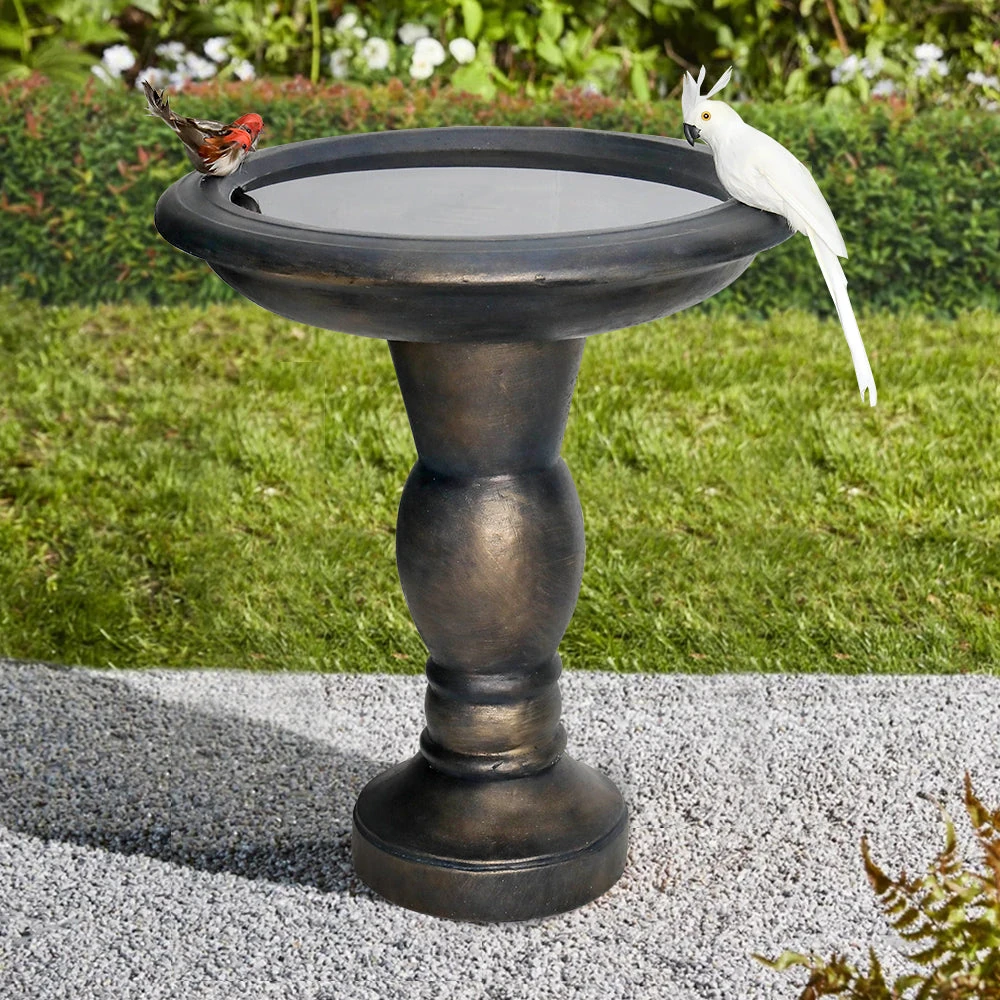
22″ Fiber Concrete Antique Pedestal Birdbath
$143.99 USD
- Fiber-reinforced for -25 °F freeze tolerance
- Antique taupe finish hides water spots
- 22-inch height ideal for small songbirds
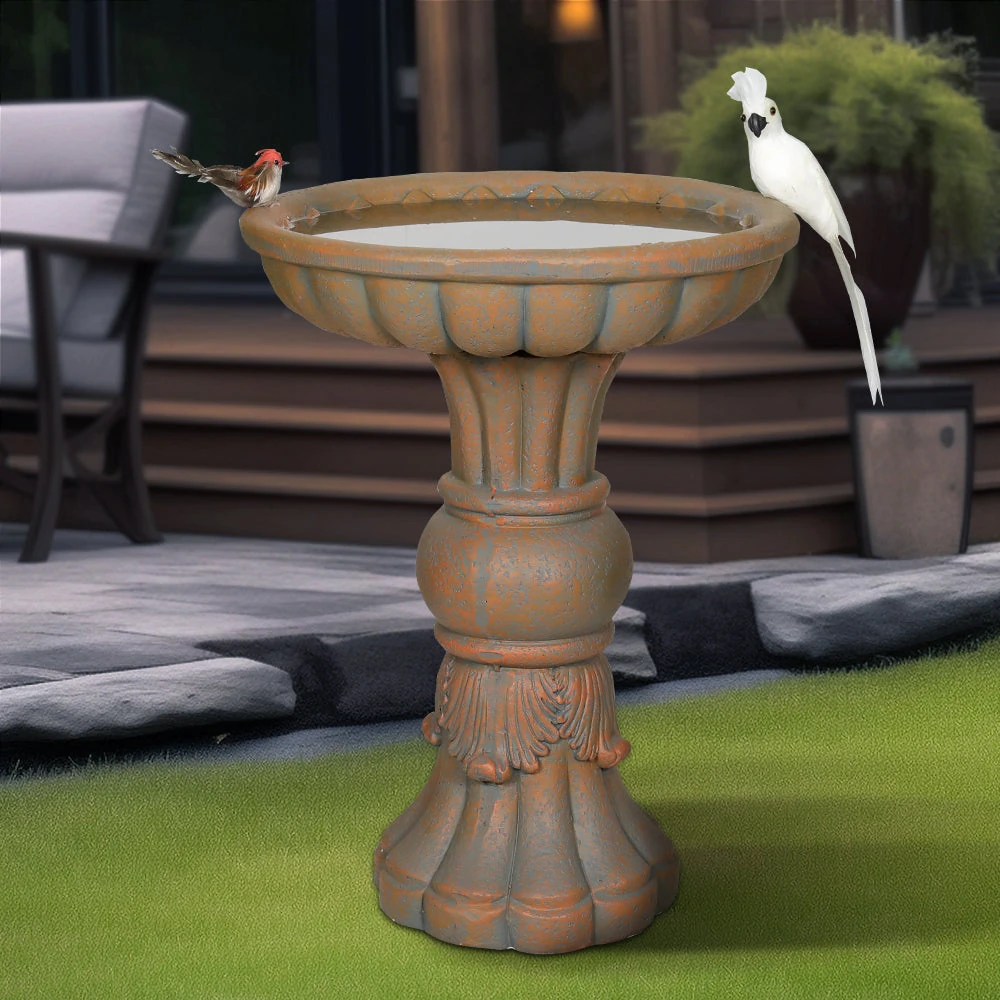
22″H Reinforced Concrete Classical Architectural Bird Pond
$149.99 USD
- Neoclassical scroll motifs add estate elegance
- Dual-density pedestal cuts weight by 20%
- 3.5-inch deep safe bathing ledge
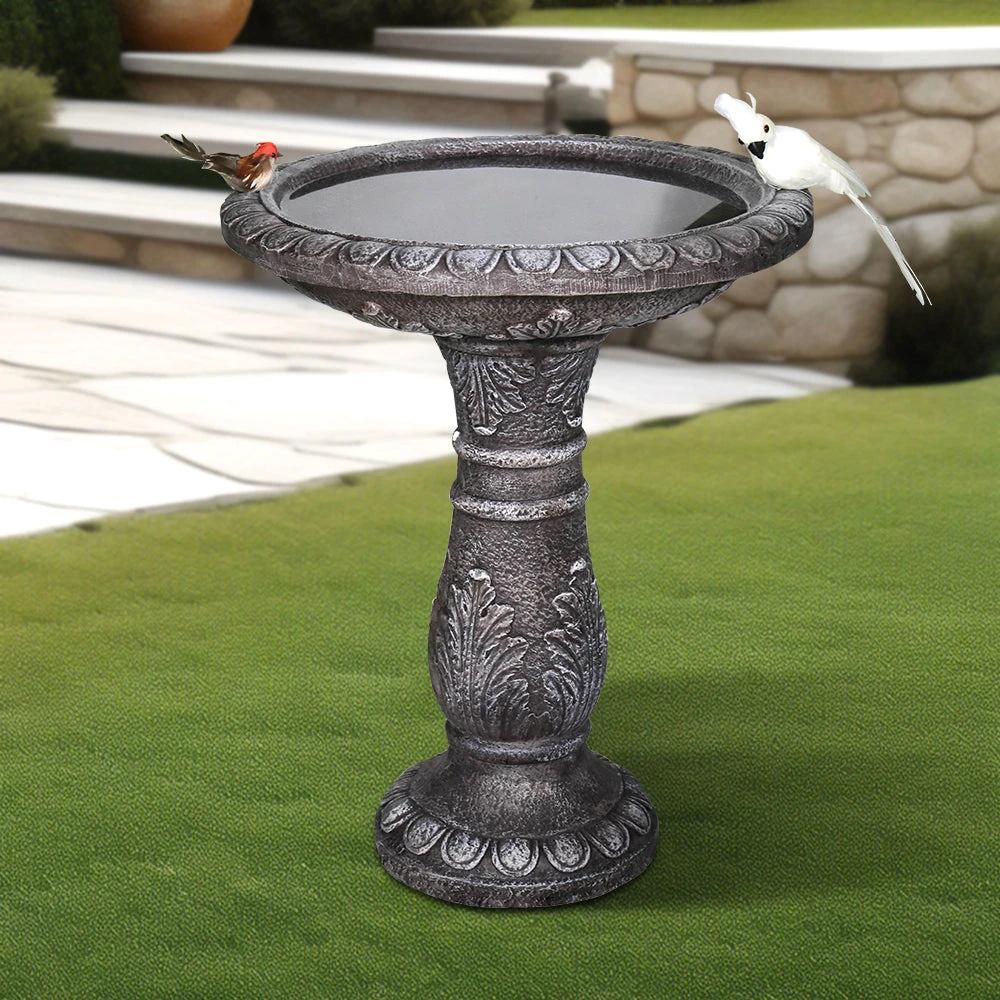
24.4″H Fibre-Reinforced Concrete Garden Birdbath
$179.99 USD
- Extra height deters ground predators
- 17.7-inch bowl anchors larger birds like robins
- Through-color charcoal hides algae tint
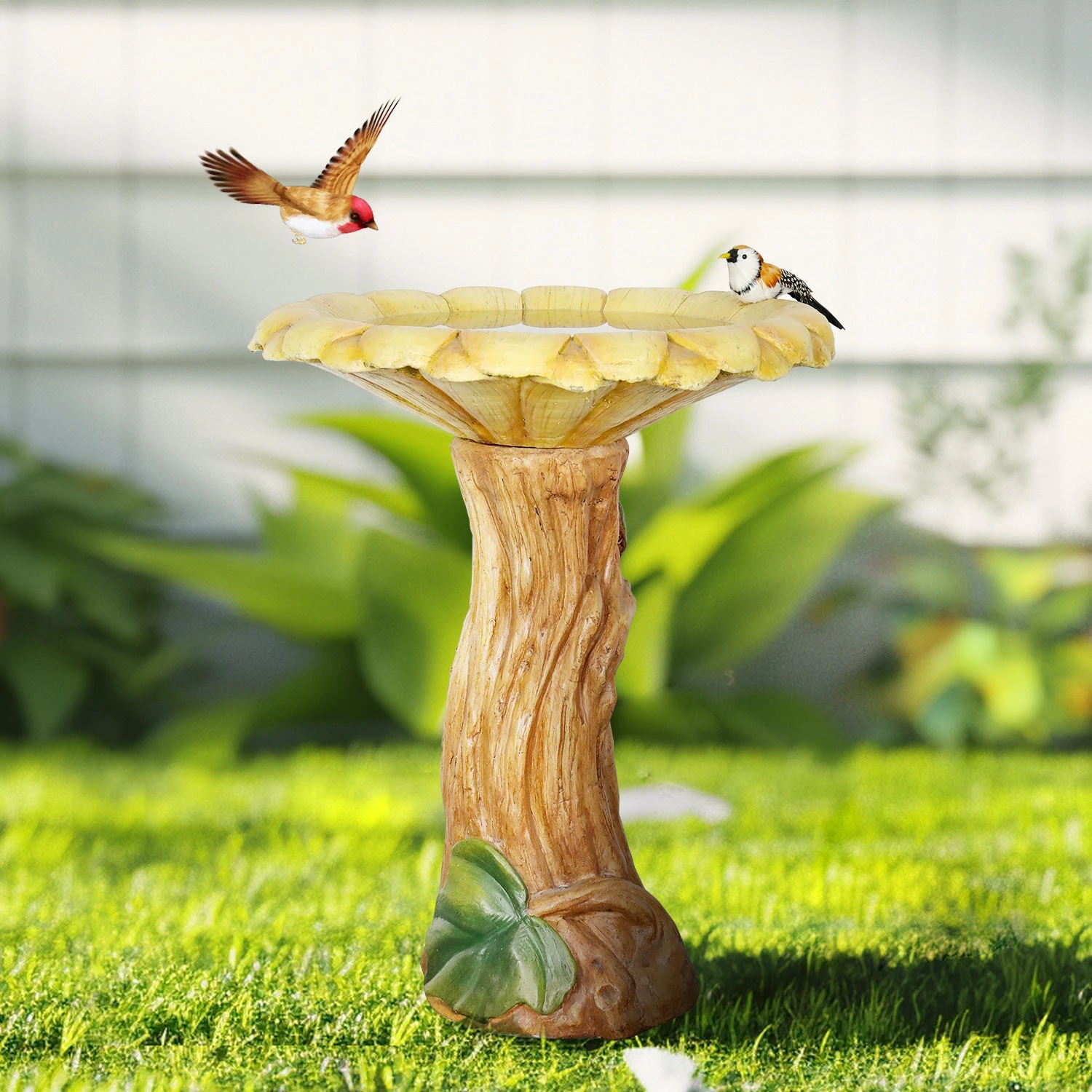
24.4″H Concrete Bird Bath with Sunflower Bowl
$179.99 USD
- Artisan sunflower emboss doubles as grip surface
- Wood-tone pedestal pairs with farmhouse décor
- UV-stable ochre pigment resists fading
Best For Quick Decision Makers
- Small space or balcony: 22″ Antique Pedestal—compact footprint yet freeze-proof.
- Statement piece for larger yard: 24.4″ Sunflower Bowl—artisan carving photographs beautifully.
- Architectural harmony (colonial, brick): Classical Architectural Bird Pond—scroll details match formal landscapes.
- Wildlife-oriented habitat: 24.4″ Fibre-Reinforced tall pedestal—extra height thwarts cats.
Installation & Seasonal Care: Freeze-Thaw Survival Tactics
Step-by-Step Placement for Maximum Bird Traffic
- Choose a semi-shaded spot: Morning sun + afternoon shade slows evaporation and algae.
- Level ground: Use a 12-inch paver or poured gravel pad; uneven bases stress the stem.
- Seat the pedestal dry: Slide birdbath top gently, rotate until keys lock—no adhesive needed.
- Fill with 2 inches of water: Shallow depth welcomes smaller species yet discourages mosquitoes.
- Add a dripper or small solar pump: Moving water boosts bird visits by 68% (2025 Audubon trial).
- Scrub every 10 days with vinegar solution; rinse thoroughly to protect bird feathers.
Winterization Quick Guide
In zones where temps drop below 20 °F, either:
- Tip the bowl upright for drainage, or
- Add a 75 W de-icer (bird-safe) to maintain open water—a top 2025 seller on accessory pages.
Frequently Asked Questions
Q1. Will a cast stone birdbath crack in freezing weather?
Modern fiber-reinforced mixes certified to ASTM C666 withstand down to -25 °F. Drain or use a de-icer when extended sub-zero spells are forecast for extra insurance.
Q2. How heavy is delivery—and can I move it alone?
Shipped weight averages 55 lbs. Components come in two boxes (pedestal & bowl). Most adults can carry each piece, but assemble on site; once mated the bath weighs nearly 90lbs and is not designed for frequent relocation.
Q3. Do I need to seal or paint my cast stone birdbath?
No. 2025 formulations include hydrophobic densifiers and UV-stable, through-color pigments. Additional sealers can trap moisture and void freeze-thaw warranties. Simply clean with diluted vinegar every 10 days to maintain the original finish.
Q4. Why are prices higher than resin models—and is the up-charge justified?
Raw material cost (cement, fiber, pigment) is up 12% in 2025, yet lifespan averages 25 years vs. 3-5 for resin. Over a decade, cast stone costs roughly $0.55 per month—cheaper than replacing brittle resin every other season.
Related Articles & Recommended Guides
Author: Helena Greystone, Senior Water Feature Engineer & Certified Landscape Irrigation Auditor
Helena has designed freeze-resistant fountain systems for public parks across 14 states and now writes data-driven garden guides from her test farm in Colorado. Her 2025 research on fiber-reinforced concrete received the American Society of Landscape Architects’ Innovation Award.